
 0
0 




.webp)

Introduction
At FYIND, we connect professional contractors, large-scale builders, carpentry workshops, and industrial procurement teams with verified, UAE-based wire nail suppliers — delivering high-quality, specification-driven wire nails in bulk (MS, GI, galvanized, mild steel, high-carbon, etc.) across Dubai, Abu Dhabi, Sharjah, Ajman, and beyond.
Whether you're working on heavy structural framing, carpentry, joinery, roofing, or industrial installations, our curated network of suppliers ensures access to nails with precise sizes, gauges, coatings, tensile strength, and packaging — while offering competitive pricing, reliable delivery, and full compliance with quality standards.
Use FYIND to request quotes, compare suppliers, and secure bulk orders — all from a single trusted B2B marketplace.
Why Choose Wire Nails — and Why Pick a Trusted Supplier in UAE
Wire nails are the dominant fastener type in modern construction — accounting for the majority of nails produced worldwide.
They offer consistent manufacturing quality (wire-drawn steel, uniform gauge, predictable diameters) — which translates into reliable holding strength, reproducibility, and compatibility with pneumatic nail guns or hammer driving.
In environmental conditions like the UAE — where humidity, coastal salt air, and occasional moisture exposure can accelerate corrosion — using galvanized or properly coated wire nails dramatically increases durability and lifespan compared with untreated (bright) steel nails.
A verified supplier ensures consistent quality, accurate sizing, proper packaging, traceability, and compliance with industrial standards — critical for large-scale construction, joinery, or infrastructure projects.
Because of these factors, selecting a trusted, specification-driven wire nail supplier via FYIND is not just convenience — it's risk mitigation and quality assurance.
What Are Wire Nails? Uses, Types & Benefits in Construction
What Defines a Wire Nail
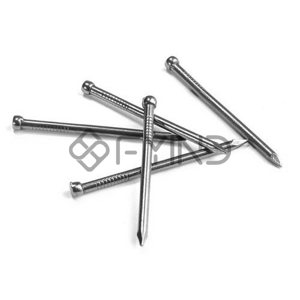
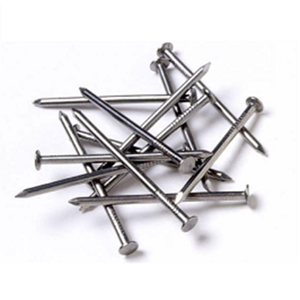
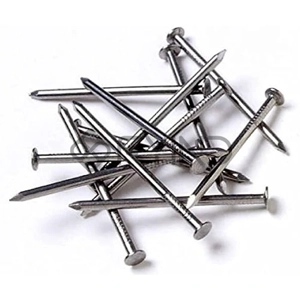
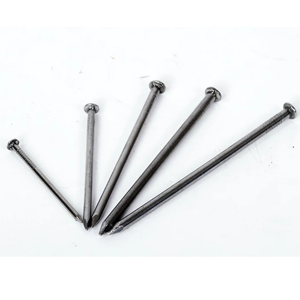
A wire nail is a fastener made by drawing steel wire through dies to a specific diameter, then cutting and forming the head and point — rather than forging or cutting nails from metal bars.
The result is a nail with a consistent shank diameter, precise gauge, predictable head shape, and uniform mechanical properties. This makes wire nails ideal for mass production, bulk orders, and mechanized installation.
Common Uses of Wire Nails
- Structural framing and wood-to-wood connections (timber framing, scaffolding, formwork)
- Carpentry, joinery, furniture making, cabinetry
- Roofing, decking, plywood/flooring installation
- General construction, wooden crates/boxes, pallets, shuttering, concrete formwork (when using hardened nails)
- Light to medium-duty industrial fastening
Benefits
- High consistency and uniformity in manufacturing → predictable performance
- Wide variety of available sizes, gauges, shank types, coatings → flexibility across applications
- Cost-effective for bulk orders relative to forged or specialty nails
- Compatible with manual hammering and pneumatic nail guns (depending on shank/gauge)
- Easily available from multiple suppliers — if using a trusted network such as FYIND
Types of Wire Nails & When to Use Them
| Nail Type | Description / Features | Typical Applications |
|---|---|---|
| Common Nails | Thick shank, large flat head. Strong holding power. | Structural framing, heavy-duty woodwork, formwork, scaffolding |
| Box Nails | Thinner shank than common nails but still (wire-drawn) steel | Light framing, crates, lighter woodwork, softer woods |
| Finishing Nails | Smaller head (less obtrusive), thinner shank — used where nail visibility is to be minimized | Trim work, moldings, cabinetry, interior finish carpentry |
| Roofing Nails | Shorter shank, larger head (or specialized head), often galvanized or coated for weather exposure | Roofing, decking, external wood structures, outdoor woodwork, pallet/packaging |
| Galvanized / Coated Wire Nails | Coated to resist corrosion and rust | Outdoor construction, coastal projects, humid climates (e.g., UAE), marine-adjacent construction, exterior woodwork |
Wire Nails vs. Finishing Nails (and Other Nail Types) — What's the Difference?
Head Size & Visibility — Finishing nails have smaller heads and thinner shanks; common/wire nails have larger heads and thicker shanks. Finishing nails are used when appearance matters; common nails when strength matters.
Holding Strength & Structural Integrity — Due to thicker shank and head, wire/common nails provide stronger holding power and are suited for structural applications; finishing nails are for light-duty or finishing work.
Application Use-Case — Wire nails: framing, structural, roofing, pallets, general woodwork. Finishing nails: trim, molding, cabinetry, interior woodwork.
Coating & Corrosion Resistance — Both types can be galvanized or coated; for outdoor or humid environments, galvanized/coated wire nails are preferred for durability.
This clear differentiation helps construction professionals choose the right type of nail for each stage or component of their project.
Why Galvanized Wire Nails Are Essential for UAE / Coastal & Humid Climates
The Gulf region, including the UAE, features hot weather, high humidity, and coastal salt air — all of which accelerate corrosion on untreated steel fasteners.
Galvanization (zinc coating) provides a protective barrier, with zinc acting as a sacrificial layer that corrodes in place of the underlying steel, significantly extending the lifespan of the nail.
Compared with plain/bright steel nails, galvanized wire nails reduce maintenance, rust, structural weakening, and replacement costs — critical for external, marine-proximate, or long-term infrastructure projects.
For heavy-duty construction, roofing, decking, outdoor joinery, and industrial applications, GI (galvanized iron) wire nails are practically indispensable in the UAE environment.
Hence, sourcing from suppliers who stock properly galvanized or coated wire nails is a must — which is where FYIND's verified supplier network offers value.
Complete Guide to Nail Sizes & Gauges for Construction Professionals
Wire Gauge, Shank Diameter, and Nail Length: What They Mean
Nails are manufactured by drawing steel wire through a series of dies to achieve a specific gauge (diameter), then cutting and forming them.
Common gauges for finishing nails are 15 gauge or 16 gauge (about 1.83 mm or 1.63 mm).
For heavier structural wire nails, gauges run thicker — depending on requirements for holding strength and shear resistance.
Nail length is chosen depending on the thickness of material being fastened; correct length ensures proper embedment without splitting or over-penetration.
Typical Nail Size & Gauge Table (for Reference)
| Application | Suggested Nail Type | Typical Gauge / Diameter | Typical Length / Size |
|---|---|---|---|
| Trim, molding, cabinetry (interior) | Finishing nails | 15–16 ga (≈1.6-1.8 mm) | 1″ to 2.5″ (25–65 mm) |
| Light framing / light woodwork | Box nails / light wire nails | ~18–16 ga | 2″ to 3″ (50–75 mm) |
| Heavy framing / structural woodwork | Common / heavy wire nails | Thicker gauge (≈3–4 mm) | 2.5″ to 4″ (65–100 mm) |
| Roofing / decking / outdoor woodwork | Galvanized roofing/wire nails | Medium/Heavy gauge, coated | 2″ to 4.5″ (50–115 mm) |
| Pallets, crates, shuttering, formwork | Common/structural nails (bright or coated) | Heavy gauge | 3″ to 5″ (75–125 mm) |
* Length values are approximate. Actual chosen length should account for material thickness, embedment depth, and type of wood or substrate.
Technical Specifications — What to Ask From Your Wire Nail Supplier
When contacting a supplier for bulk wire nails, ensure you specify and verify the following parameters:
- Material: Mild steel (MS), high-carbon steel, stainless (if required), or steel wire rod grade.
- Wire gauge / shank diameter: in mm (or gauge), matching required holding strength.
- Nail length / size: exact length for your project — standard or custom lengths.
- Head type: flat head, small head (finish), ring shank (for increased pull-out resistance), smooth shank, twisted shank, etc.
- Point type: diamond point, chisel point, ring-cut point — depending on application (wood, plywood, sheet, concrete formwork).
- Coating / Finish: plain (bright), electro-galvanized, hot-dip galvanized, zinc-flake, cement/vinyl coated, phosphate coated, epoxy, etc.
- Tensile strength & hardness: especially for structural or concrete-formwork nails; ensure the nails meet required mechanical properties.
- Corrosion resistance / coating thickness: gauge of galvanization (e.g. grams per square meter Zn), compliance with corrosion-resistance standards.
- Packaging & packing unit: kg per bag/carton, cardboard or poly wraps, sealed packing to avoid moisture.
- MOQ (Minimum Order Quantity) and bulk-order options.
- Delivery & logistics: delivery across UAE (Dubai, Abu Dhabi, Sharjah, Ajman, etc.), lead times, shipping/handling, VAT compliance.
As a procurement specialist, insisting on these specs helps avoid problems later (corrosion, splitting wood, poor holding power, mismatched sizes, etc.).
How to Evaluate Wire Nail Quality: Coating, Hardness & Strength Tests
Coating & Corrosion Resistance
- Prefer hot-dip galvanized nails for maximum corrosion resistance — especially for outdoor, coastal, or humid-climate projects.
- Check for coating thickness, uniform coverage, no bare spots or flaking. Ask for coating specification or compliance with galvanization standards.
- For projects with high exposure (marine, coastal), consider zinc-flake coatings or duplex (galvanized + painted/epoxy) for extra protection.
Mechanical Strength & Hardness
- For structural, formwork or heavy-duty applications, nails must withstand shear loads, holding pressure, wood shrinkage/swell, etc. Request tensile strength data, hardness testing results, pull-out resistance data, especially for ring-shank nails.
- In some cases, conduct a pull-out test or shear test on sample nails to ensure compliance before bulk ordering.
Consistency & Manufacturing Quality
- Verify uniformity of shank diameter, straightness, point sharpness, head shape and alignment — key for pneumatic nailers or power tools.
- Ask supplier for batch traceability, mill certificates or material test certificates (MTCs) for bulk orders.
- For large projects, consider pre-shipment inspection or third-party QC before acceptance.
By applying these evaluation criteria, contractors and procurement teams can avoid substandard nails reducing risk of project delays, structural failure, or corrosion-related issues.
Wire Nail Price Guide – UAE Market (Per Kg / Carton / Bulk Orders)
Note: Prices vary depending on material (MS, galvanized), gauge, coating, quantity (MOQ), packaging, and delivery location. The figures below are indicative; always request actual quotations.
| Nail Type / Specification | Typical Price Range | MOQ / Packaging Notes | Comments |
|---|---|---|---|
| Bright (plain steel) wire nails (common) | Lower end of price scale | 25 kg bags / 50 kg cartons | Only for indoor or non-corrosive environments |
| Electro-galvanized wire nails | Slight premium over plain nails | 25 kg / 50 kg packing | For light humidity or indoor use |
| Hot-dip galvanized wire nails (GI) | Mid-to-high price range | Bulk cartons (e.g. 50 kg) | Recommended for outdoor/coastal UAE use |
| Ring-shank coated nails | Higher price (due to complexity) | MOQ depends on length/gauge | Ideal for structural, pallet, decking, formwork |
| Specialty nails (large size, custom) | Highest price (custom orders) | Usually MOQ defined per supplier | For large scale industrial / structural projects |
* Because of local market fluctuations (steel rod price, zinc price, shipping costs), always confirm current price per kg or per 1,000 nails. FYIND helps by enabling multiple supplier quotes for comparison — thus ensuring competitive pricing.
MOQ, Packaging & Delivery Options — What to Expect from UAE Suppliers
When ordering wire nails in bulk through FYIND, typical supplier commitments include:
MOQ (Minimum Order Quantity): Often 25 kg, 50 kg, or more — depending on gauge, coating, and nail type. Large contractors may require carton-level or pallet-level orders.
Packaging: Sealed poly or paper bags (e.g. 25 kg each), or bulk cartons (e.g. 50 kg). For galvanized nails especially, sealed, moisture-protected packaging helps prevent premature rust during storage/shipping.
Delivery: UAE-wide: Dubai, Abu Dhabi, Sharjah, Ajman, Ras Al Khaimah, Fujairah, etc. Freight forwarders, pallet delivery, or door-to-site delivery depending on order volume.
Lead Times: For stocked items — usually 5–7 business days; For custom orders (special length/gauge/coating) — may range from 2 to 4 weeks depending on supplier backlog and availability.
Logistics & Handling: Many suppliers include palletization, shrink-wrapping, and transport to project site. FYIND helps coordinate logistics and supplier communications for smooth delivery.
Verified Wire Nail Suppliers in UAE
1. Adams Tool House General Trading LLC – Dubai
Address: Office M24, Alphamed Building, Hor Al Anz East, Abu Hail, Dubai, UAE
Phone: +971 4 238 9996
Overview: A reputable supplier offering a wide range of wire nails, finishing nails, brad nails, and construction fasteners. Known for consistent stock availability and fast delivery within Dubai and the Northern Emirates.
2. Prestige Building Material Trading LLC – Sharjah
Address: Shed No. 2, Emirates Street, Al Sajaa Industrial Area (Landmark: Sharjah Cement Factory), Sharjah, UAE
Phone: +971 6 566 5088
Overview: A trusted partner for bulk MS and GI wire nail procurement, with competitive pricing, bulk carton supply, and strong support for contractors operating in Sharjah, Dubai, and Ajman.
3. Kagalwala Trading LLC – Deira, Dubai
Address: Al Manal Centre, Sabakha Road, Deira, Dubai, UAE
Phone: +971 4 221 2518
Overview: Known for a broad inventory of general hardware, wire nails, and fasteners sourced from regional and international manufacturers. Popular among carpentry firms and joinery workshops.
4. Most and Best General Trading Co LLC – Sharjah
Address: 8C7Q+MFC - Industrial Area 13, Sharjah, UAE
Phone: +971 4 266 7611
Overview: A preferred supplier for industrial-grade wire nails, offering both MS and galvanized options, suitable for wooden packaging companies, formwork contractors, and furniture manufacturers.
5. Fremont Ship Spare Parts & Chandlers LLC – Dubai
Address: Belhasa Compound, WH-11A/10A/12A, Al Quoz 3, Dubai, UAE
Phone: +971 4 379 5159
Overview: Specialized in marine-grade fasteners, including corrosion-resistant GI wire nails, ideal for coastal and offshore projects requiring enhanced durability.
6. AQMM General Trading LLC – Dubai
Address: Manama Street, Nad Al Sheba, Industrial Area 2, Ras Al Khor, Dubai, UAE
Phone: +971 4 224 9611
Overview: Known in the UAE fastener market for affordable, reliable steel wire nails, coil nails, and construction staples, with strong distribution capabilities across Dubai and Abu Dhabi.
7. Joga Ram General Trading – Dubai
Address: 52, 22 Street, Industrial Area 2, Al Qouz, Dubai, UAE
Phone: +971 4 388 1999
Overview: A well-established supplier serving carpentry, joinery, and interior fit-out companies with bulk quantities of assorted wire nail sizes, competitive pricing, and quick dispatch.
Certifications & Quality Assurance — What to Verify
To ensure long-term durability, compliance, and safety, always request the following from your wire nail supplier:
- Mill Certificates / Material Test Certificates (MTCs) — confirming steel grade, carbon content, tensile strength, hardness, chemical composition.
- Coating Compliance — for galvanized nails: standard followed (e.g. hot-dip galvanization norms), coating thickness, uniform zinc deposition.
- Batch Traceability & Quality Control — batch/lot numbers, date of manufacture, storage conditions prior to shipping.
- Corrosion / Salt Exposure Testing — for coastal/humid applications, consider nails tested under salt-spray or corrosion-resistance protocols.
- Packaging & Storage Standards — sealed packing, moisture-proofing, protection against rust during transit — especially crucial for UAE climate.
By insisting on these, you ensure that nails perform to expectation, deliver long-term value, and minimise rework or structural issues.
MS vs. GI (Galvanized) Wire Nails — Comparison Guide for Industrial Projects
| Parameter / Factor | MS (Mild Steel / Plain / Bright) Wire Nails | GI (Galvanized / Zinc-Coated / Hot-Dip) Wire Nails |
|---|---|---|
| Corrosion Resistance | Low — prone to rust & oxidation in humid/coastal environment | High — zinc coating provides barrier + sacrificial protection |
| Cost | Lower upfront cost | Higher material & processing cost (coating) |
| Durability (Outdoor / Long-Term) | Poor — rust may degrade holding strength, structural integrity | Very good — suitable for outdoor, marine, coastal, and long-term use |
| Maintenance Requirements | Frequent inspections, possible replacement | Minimal maintenance, longer lifespan |
| Best Applications | Indoor, dry environment, temporary structures, formwork (short-term) | External structures, roofing, decking, coastal or humid zones, long-term builds |
| Suitability for Bulk & Export Orders | Acceptable — especially for budget-constrained short-term use | Preferred — for long-term projects, critical builds, resale, export |
For UAE projects — especially external ones, coastal, or long-term infrastructure — GI wire nails are usually the wise choice. FYIND's supplier network ensures access to both MS and GI nails, with proper technical data, coating specs, and bulk-order options.
Industry Best Practices & Recommendations for UAE Projects
- Always use galvanized or coated wire nails for outdoor, coastal, humid, or long-term structures.
- For structural applications or heavy load-bearing woodwork — use common wire nails with thicker shank, flat head, possibly ring-shank or twisted shank for higher pull-out resistance.
- For finish work (trim, interior carpentry) — use finishing nails (smaller head, thinner shank) to get clean finish and minimize visible nail heads.
- Always specify nail size, gauge, coating, packaging, and MOQ clearly when requesting quotation — avoid ambiguity that may result in wrong nails being delivered.
- Verify supplier credentials — especially for bulk or export orders — by requesting MTCs, batch traceability, corrosion/coating specifications, packing & storage conditions.
- Plan logistic and storage factors: sealed packaging, moisture-proof wrapping, dry storage to avoid pre-use rust or coating damage — especially in the UAE climate.
- Quality assurance & compliance — through batch traceability, MTCs, sometimes third-party inspection — ensuring nails meet industrial standards.