Walk past almost any scaffold in Dubai, Sharjah, or Abu Dhabi and you'll see them - small yellow or black plastic caps sitting quietly over every open tube end and coupler bolt. They rarely get mentioned in a project spec sheet, yet a missing end cap is one of the fastest ways a routine site inspection turns into a stop-work order.
A tiny plastic cap, doing a surprisingly serious job on every UAE construction site.
An open scaffold tube end is a sharp, exposed edge at roughly eye or head height on a busy site and a bare coupler bolt sticking out is exactly the kind of snag hazard that catches sleeves, cables, and skin. End caps exist to solve three problems at once:
Most UAE site safety inductions and third-party scaffold inspections (DM, Trakhees, ADM-linked sites) treat exposed tube ends and bare coupler bolts as a fail item, even though end caps aren't always named explicitly in the base scaffolding standard. In practice, if your scaffold is due for a walk-through, capped ends are the difference between a pass and a snag list.
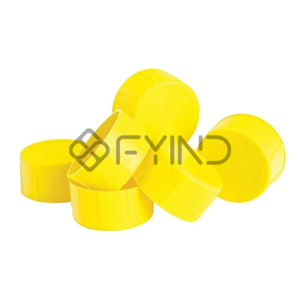
The most common type - a round, domed push-fit cap that seals the open end of a scaffold tube. Sized to the standard 48.3mm OD tube used across UAE scaffolding, though smaller and larger diameters exist for non-standard pipe. Sold almost exclusively in high-visibility yellow for site safety compliance.
A smaller, purpose-sized cap that fits over the protruding bolt or wing-nut head of a coupler, rather than the tube itself. These come in specific heights - 27mm is a common UAE stock size - matched to how far the bolt sticks out once tightened. Easy to overlook, but this is exactly the snag point most likely to catch clothing or skin during scaffold erection.
A cylindrical plastic sleeve inserted into the tube end for stacking, transport, and storage protection rather than day-to-day site use. Cores stop tube ends denting or deforming when stacked and racked in a yard, and are typically supplied in black or grey rather than safety yellow, since they're not meant to stay on during active use.
For long-duration industrial sites, marine-adjacent projects, or scaffolds left standing through peak UAE summer, standard LDPE caps often aren't enough. Heavy-duty end caps use thicker-walled HDPE construction and UV-stabilised additives to resist cracking, fading, and deformation over months of direct sun - worth the small price premium on any job lasting more than a few weeks.
Capping open tube ends on an erected scaffold? You need standard tube end caps. Protecting workers from bolt heads on couplers? You need coupler end caps sized to the bolt protrusion. Stacking tubes in a yard or moving them on a truck? Scaffolding cores are the right call - don't use safety-yellow tube caps for this, since they're not designed for repeated stacking pressure.
| Product | Size | Height | Colour | Material |
|---|---|---|---|---|
| Scaffolding Tube End Cap / Pipe End Cap | 48.3mm OD (standard); 18–30mm for light-duty/rebar sizes | 30–45mm dome height | Safety Yellow (standard); Orange, Black PVC cone, or custom colour on request | LDPE, HDPE, or PVC |
| Scaffolding Coupler End Cap | Fits standard coupler bolt/wing-nut head | 27mm (common UAE stock size) | Safety Yellow (standard) | LDPE or HDPE plastic |
| Scaffolding Core | 48.3mm OD (standard) | 60–100mm sleeve length | Black or Grey | HDPE plastic |
Sizes and heights vary slightly by manufacturer - always confirm exact dimensions against a sample before placing a bulk order.
"Scaffold end cap" covers a wider size and colour range than most buyers expect. Before ordering, confirm which of these your project actually needs:
| Specification | What to Look For |
|---|---|
| Material | LDPE or HDPE plastic - LDPE offers more flexibility for an easy push-fit; HDPE holds shape better in extreme UAE summer heat |
| Fit Diameter | Standard 48.3mm OD for tube caps; coupler end caps sized separately by cap height (e.g. 27mm) to match bolt protrusion |
| Colour | Safety yellow is standard for site visibility; black is generally reserved for cores and non-visible internal use |
| Wall Thickness | Thicker-walled caps resist cracking under UAE summer heat and UV exposure - thin, brittle caps are a common quality complaint |
| Fit Type | Push-fit friction grip is standard; confirm it holds securely without needing tape or adhesive to stay on |
Standard LDPE caps can turn brittle and crack after prolonged direct summer sun exposure on outdoor UAE sites. If a scaffold is staying up for months rather than weeks, ask specifically for UV-stabilised or HDPE caps - the extra cost is small compared to replacing cracked caps mid-project.
A small, cheap part is still worth sourcing carefully - a cracked or missing cap is what a safety officer sees first. Below are established scaffolding accessory suppliers and manufacturers serving Dubai, Sharjah, Abu Dhabi and the Northern Emirates.
Searching for a plastic scaffold end cap supplier near you in the UAE? Coverage across Dubai, Sharjah, Abu Dhabi and Ajman is dense enough that most contractors can get next-day delivery regardless of exact site location - the three suppliers below between them cover trading stock, verified coupler-specific caps, and direct-from-manufacturer supply.
Al Naseeha Building Materials Trading Co LLC lists a dedicated Coupler End Cap and Tube End Cap in its catalogue, plus Safety Rebar Caps in mushroom style — useful when a single project's snag list calls out bolt heads, open tube ends, and exposed rebar all at once, rather than sourcing each separately.
Al Barshaa Plastic Product Company L.L.C. manufactures plastic pipe end caps, scaffolding caps, and rebar protection caps for construction and industrial applications. Their product range is designed to protect scaffold tube ends, exposed reinforcement bars, and threaded rebars from impact, dust, moisture, and corrosion during storage, transportation, and installation. The company also manufactures custom plastic protection caps for various construction requirements across the UAE.
These are cheap parts, but they fail in predictable ways - and each failure has an easy fix if you catch it early.
Usually means the cap diameter is a fraction too large for the tube, or repeated removal has stretched the friction grip. Fix: confirm exact 48.3mm fit at purchase, and replace caps that have been removed and refitted many times rather than reusing a loose one.
Common after months of direct UAE summer sun on standard LDPE caps. Fix: switch to UV-stabilised or HDPE caps for scaffolds staying up longer than a few weeks, and do a visual sweep for cracked caps during routine scaffold inspections.
Caps are small and easy to lose during transport or storage between jobs. Fix: keep a small buffer stock of spare caps on-site rather than ordering exact quantities, since replacement caps are cheap relative to a failed safety walk-through.
A generic coupler end cap that's too shallow won't fully cover a longer bolt protrusion, leaving the sharp tip exposed. Fix: measure the actual bolt protrusion after tightening and order coupler end caps sized to match - 27mm is a common UAE stock height, but always confirm against your specific coupler brand.
Prolonged UV exposure fades safety yellow to a dull, less visible tone over time. Fix: treat visibly faded caps as due for replacement even if they're not physically cracked, since the visibility function is part of what they're there for.
Indicative per-piece ranges - bulk orders bring the per-unit price down significantly.
| Cap Type | Standard LDPE (AED) | UV-Stabilised / HDPE (AED) |
|---|---|---|
| Standard Tube End Cap (48.3mm) | AED 1 – 2.5 | AED 2.5 – 4 |
| Coupler End Cap (e.g. 27mm) | AED 1.5 – 3 | AED 3 – 5 |
| Scaffolding Core (storage/transport) | AED 3 – 6 | AED 6 – 8 |
Indicative price ranges for reference only - actual quotes vary by order volume, colour, material grade, and the specific supplier.
Because individual caps cost so little, chasing the absolute lowest AED figure per piece rarely moves the needle much on total project cost. The bigger savings come from ordering in bulk from one supplier instead of topping up small quantities repeatedly, and from choosing the right grade the first time - a cheap cap that cracks in six weeks and needs replacing isn't actually the affordable option.
Because per-piece cost is so low, end caps are almost always ordered in bulk - thousands rather than dozens. When requesting a wholesale or bulk purchase quote, specify the exact type (tube cap, coupler end cap, or core), size/height, material grade, and colour up front so the supplier can quote accurately.
End caps are almost always ordered alongside these related scaffold components.
In everyday UAE supplier language, these terms are used interchangeably - both refer to the same push-fit plastic cap covering an open scaffold tube end. "Tube cap" or "pipe end cap" simply emphasises what it fits onto, while "scaffold end cap" is the broader category name that also includes coupler-specific caps.
Plastic (LDPE/HDPE) caps dominate the UAE market - they're lightweight, cheap, available in bright safety colours, and hold up well under normal site conditions. Rubber caps offer more flex and slightly better impact absorption but cost more, are less common in bulk UAE stock, and degrade faster under prolonged direct sun than UV-stabilised HDPE. For most standard scaffolding use, plastic is the practical default; rubber is more of a specialist or niche choice.
Most orders pair end caps with scaffolding clamps and couplers (since coupler end caps only make sense alongside the couplers they protect), ledgers, base/screw jacks, and board retaining couplers. If you're buying tubes fresh, it's worth ordering caps in the same purchase rather than as an afterthought.
Structurally, yes - a scaffold's load-bearing capacity doesn't depend on end caps. But most UAE site safety walk-throughs treat exposed tube ends and bare bolt heads as a fail item, and leaving tubes uncapped increases both injury risk and internal corrosion from rain and debris. In practice, "can" and "should" are very different answers here.
Standard LDPE caps in continuous UAE outdoor sun often need replacing within a few months as they turn brittle. UV-stabilised or HDPE caps can last considerably longer - often a year or more of repeated use - before cracking or fading enough to warrant replacement.
Yes - a properly fitted end cap seals the open tube end and stops rainwater and moisture from pooling inside, which is one of the main drivers of internal tube corrosion over time. A missing or loose cap defeats this, so check the fit isn't just cosmetic.
Standard LDPE caps can soften slightly and become more prone to cracking under intense, prolonged UAE summer heat. HDPE and UV-stabilised caps handle heat and UV exposure noticeably better and are the recommended choice for any scaffold left standing through peak summer months.
Indirectly, yes. They don't add any corrosion-resistant coating to the tube itself, but by sealing out rainwater, humidity and debris, they slow the internal rusting that happens when moisture sits inside an open tube - especially relevant in the UAE's coastal humidity.
For standard tube ends, 48.3mm OD is the UAE/GCC standard fit. For coupler end caps, the sizing is by cap height rather than diameter - 27mm is a common stock size, but always measure the actual bolt protrusion on your specific coupler before ordering.
Yes, in most cases - a cap in good condition can be removed and refitted several times. Repeated removal does stretch the friction grip over time though, so caps that no longer sit firmly should be replaced rather than reused.
An end cap is meant to stay on the tube during active use for safety and weather protection. A core is a transport/storage protector, typically inserted for stacking and racking rather than left on an erected scaffold - that's why cores are usually black rather than safety yellow.
High-visibility yellow makes exposed tube ends and bolt heads easy to spot from a distance, which supports site safety compliance. Black or clear caps are typically only used for cores and non-visible internal protection, not for caps left on an active, in-use scaffold.
Yes - because per-piece cost is low, most UAE suppliers and manufacturers expect bulk orders in the thousands rather than dozens, and price accordingly. Manufacturers like Al Barshaa Plastic Product Company typically offer better bulk rates than smaller trading suppliers.
There isn't a single dedicated international standard specifically for plastic end caps the way there is for couplers (BS 1139/EN 74). Instead, they're generally treated as a practical safety-compliance item under general site safety and scaffold inspection requirements - confirm with your site's safety officer if a specific certification is required for your project.