... Read more...
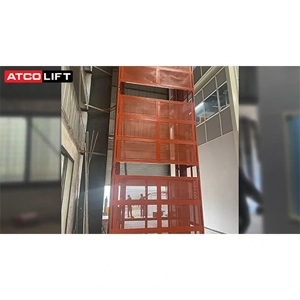
Are you searching for reliable reciprocating conveyor systems in Dubai, Abu Dhabi, or across the UAE? Whether you're upgrading your warehouse vertical material handling or installing new multi-level transport solutions in your manufacturing facility, choosing the right vertical reciprocating conveyor (VRC) is crucial for operational efficiency and workplace safety.
A reciprocating conveyor, commonly known as a Vertical Reciprocating Conveyor (VRC), is an industrial material lift specifically engineered to transport goods, pallets, and products between different floor levels. Unlike traditional freight elevators, these vertical conveyors are purpose-built exclusively for material handling—not passenger transport—making them significantly more cost-effective and efficient for UAE industrial operations.
Operating under ASME B20.1 safety standards rather than stringent elevator codes, VRC systems offer UAE businesses a compliant, economical solution for vertical material transport in warehouses, distribution centers, manufacturing plants, and multi-story facilities across Dubai, Sharjah, and Abu Dhabi.
Hydraulic Reciprocating Conveyors
Hydraulic VRC lifts utilize compressed fluid power to raise and lower materials smoothly. Ideal for two-level applications in UAE facilities, these systems handle load capacities from 300 kg to 2,700 kg (660 to 6,000 lbs) with vertical travel heights up to 22 feet. Popular in food processing plants and light manufacturing across the Emirates, hydraulic vertical lifts offer affordable initial investment with reliable performance for standard operations.
Mechanical Reciprocating Conveyors
Mechanical VRC systems employ electric hoists, cables, and chain drives for superior lifting power. Perfect for heavy-duty UAE industrial applications, these conveyors accommodate loads from 10 pounds to 45,000 kg (100,000 lbs) with vertical rises exceeding 60 meters (200 feet). Multi-level configurations make mechanical lifts the preferred choice for automotive assembly facilities, logistics hubs in Jebel Ali, and high-capacity warehouses throughout the UAE.
Modern reciprocating conveyors in the UAE market incorporate multiple safety mechanisms meeting international standards:
UAE industrial facilities must verify ASME B20.1 compliance certification when procuring vertical reciprocating conveyors.
UAE businesses choosing reciprocating conveyors over freight elevators realize substantial savings:
Before finalizing your purchase from suppliers in Dubai or Abu Dhabi:
Partnering with established UAE-based suppliers like ALE International LLC in Dubai offers distinct advantages:
When evaluating vertical reciprocating conveyors for your UAE facility, prioritize:
Contact reputable reciprocating conveyor suppliers in UAE today to request detailed quotations, technical specifications, and site assessment. Whether you need a compact hydraulic lift for a Dubai warehouse or a heavy-duty mechanical VRC for Abu Dhabi manufacturing, local suppliers can engineer the perfect vertical material handling solution for your facility.
1. What is a reciprocating conveyor, and how is it used in UAE industries?
A reciprocating conveyor is a material handling system that moves bulk or unit loads through a back-and-forth motion. In the UAE, it's essential for powder handling, bag palletizing, and cement plant logistics, offering precise feeding and transfer in harsh environments.
2. Why choose a reciprocating conveyor for my Dubai or Abu Dhabi facility?
Its robust design excels in the UAE's high-temperature, dusty conditions. It ensures reliable, low-maintenance bulk material handling, ideal for construction, steel, and fertilizer industries across the Emirates.
3. How does a reciprocating conveyor system improve operational efficiency?
It provides controlled, intermittent feeding with minimal spillage and degradation. This precision boosts throughput in UAE manufacturing and processing plants, optimizing your material handling solution.
4. What materials can a reciprocating plate conveyor handle in the Middle East?
From cement and aggregates to industrial minerals and food granules, it handles abrasive, hot, or dusty materials common in GCC industrial sectors.
5. What's the main difference between reciprocating and belt conveyors?
Unlike continuous belt systems, a reciprocating conveyor uses a reciprocating plate or pan for a push-pull motion. This allows for better metered feeding and is superior for handling fine powders in UAE cement and chemical plants.
6. Are these conveyors suitable for heavy-duty applications in the UAE?
Absolutely. Built for heavy-duty cycles, they are perfect for UAE mining, quarry operations, and steel mill slag handling, where durability is critical.
7. How do I find a reliable reciprocating conveyor supplier in the UAE?
Look for established material handling equipment suppliers in Dubai, Sharjah, or Abu Dhabi with proven experience in industrial conveyor systems and local after-sales support.
8. What maintenance is required for a reciprocating conveyor in sandy conditions?
Routine checks on drive mechanisms and sealing are vital to prevent sand ingress. Partnering with a local conveyor company ensures access to specialized maintenance and spare parts in the UAE.
9. Can it be integrated with existing palletizing or packaging lines in my UAE factory?
Yes. Reciprocating conveyors are key for automatic palletizing systems and bag handling, providing precise indexing to seamlessly integrate with your UAE production line.
10. What are the key benefits for a UAE business investing in this system?
Key benefits include high efficiency, low operational cost, durability in extreme climates, and enhanced plant safety—delivering a strong ROI for UAE industrial operations.
Request quotes from verified suppliers, compare specifications, and invest in a reciprocating conveyor system that delivers safety, efficiency, and long-term value for your Emirates operation.