... Read more...



Successful building projects involving residential, commercial, and infrastructural improvements are ensured by knowing cement prices in the United Arab Emirates and locating trustworthy cement suppliers in the country. Contractors and homeowners may find high-quality wall finishing materials at cheap prices by having a thorough understanding of cement producers in the UAE, ready mix concrete suppliers nearby, and cement bag prices ranging from Ultratech cement to OPC cement providers. The UAE's building supply sector provides a wide range of choices, whether you're looking for bulk cement suppliers or cement available nearby.
| Cement Type | Specification | Approx. Price Range (AED) |
|---|---|---|
| Standard OPC | 50 kg bag | AED 12 – 18 per bag |
| Ultratech Cement | 50 kg bag | AED 15 – 20 per bag |
| White Cement | 50 kg bag | AED 35 – 55 per bag |
| Ready Mix Concrete | Per cubic meter | AED 280 – 450 per m³ |
| Bulk Cement | Per ton (large volume) | AED 200 – 350 per ton |
Note: Cement price varies according to regional demand, worldwide supply, and shipping costs. The cost of a bag of cement in Dubai varies depending on supplier, delivery location, and order size.
Construction projects in Dubai, Abu Dhabi, Sharjah, Ajman, and the Northern Emirates are served by trustworthy cement suppliers in the United Arab Emirates.
| Supplier | Location | Contact | Products |
|---|---|---|---|
| Canvas General Trading LLC | Al Quoz, Dubai | +971 50 226 8289 | Comprehensive cement and building materials |
| QCON General Trading LLC | Al Quoz, Dubai | +971 56 409 0966 | Quality cement and construction supplies |
| SM & Rahmani Building Materials Trading LLC | Deira, Dubai | +971 54 586 7752 | Wide range of cement products |
| Al Dereya Scaffolding Trading LLC | Ajman | +971 50 278 4566 | Construction materials and cement supply |
| Smooth Technical Trading | Abu Dhabi | +971 50 826 7792 | Technical building materials and cement |
Ordinary Portland Cement (OPC) remains the most often specified cement for home construction due to its exceptional workability and strength development.
Suppliers such as Canvas General Trading LLC (+971 50 226 8289) and QCON General Trading LLC (+971 56 409 0966) offer OPC cement in 43-grade and 53-grade varieties that satisfy international standards for infrastructure, commercial, and residential applications.
Cement manufacturers in UAE generate millions of tons a year to meet the need for area construction. Leading producers include Ras Al Khaimah Cement, Emirates Cement Company (Fujairah), Al Ghurair Gypsum (Dubai), and Union Cement Company (Sharjah).
Local production reduces reliance on imports, lowering cement prices in the UAE while ensuring ESMA quality standards.
Cement for Road Construction — Demands low heat generation, sulfate resistance, and quick strength increase. High-strength OPC grades and Portland Pozzolana Cement (PPC) are appropriate for pavement and highway applications. Suppliers such as Smooth Technical Trading (Abu Dhabi, +971 50 826 7792) offer infrastructure-grade cement.
Cement for Bridge Construction — Requires outstanding durability, low permeability, and strength. High-performance concrete using 53-grade OPC or specially blended cements ensures structural integrity for 50–100 year design lives. Specifications include controlled heat hydration and sulfate resistance for marine conditions.
Cement for House Construction — Usually uses 43-grade OPC for beams, columns, and foundations, while 53-grade is required for important structural components. Depending on mix design, 8–12 bags of 50 kg cement are needed per cubic meter. Nearby vendors such as SM & Rahmani Building Materials Trading LLC (Deira, Dubai, +971 54 586 7752) offer competitive pricing.
Ready Mix Concrete and Concrete Suppliers — Ready mix concrete suppliers near me transport pre-mixed concrete, eliminating on-site batching. Grades range from M15 to M60, costing AED 280–450 per cubic meter depending on grade, admixtures, and delivery distance.
✓ Ready mix concrete suppliers near me — transport pre-mixed concrete to building sites, eliminating on-site batching. Grades M15 to M60 for structural elements, slabs, columns, and foundations.
✓ Concrete block suppliers near me — supply interlocking pavers, solid blocks, and hollow blocks. Standard 200x200x400mm hollow blocks cost AED 1.50–3.00 per unit.
✓ Bulk cement suppliers near me — provide truckload volumes for huge projects. Bulk cement prices give 15–25% savings over bagged cement for purchases over 20 tons.
✓ Cement delivery services — mixing cement with aggregates and water in transit mixer trucks. Vendors like Al Dereya Scaffolding Trading LLC (Ajman, +971 50 278 4566) handle delivery coordination.
Fly Ash Suppliers in UAE — Provide supplementary cementitious materials enhancing concrete performance and sustainability. Fly ash replaces 15-40% of cement, reducing costs while improving workability, strength, and durability. Class F fly ash suits general construction; Class C has some cementitious properties independently.
Calcium Aluminate Cement Suppliers — Provide specialized high-alumina cements for chemical-resistant building, quick repairs, and refractory applications. CAC can tolerate harsh chemical conditions and high temperatures, reaching 70% design strength in 24 hours. Costs AED 80–150 per 25 kg.
White Cement Price in UAE and Applications — White cement costs AED 35–55 for a 50 kg bag. Applications include tile grout, terrazzo, architectural finishes, decorative concrete, and artistic installations. Despite being chemically equal to gray OPC, white cement is 2-3 times more expensive due to cosmetic appeal.
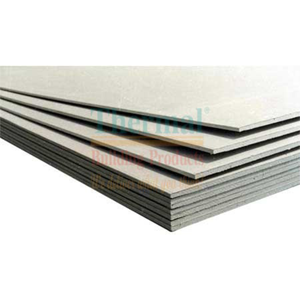
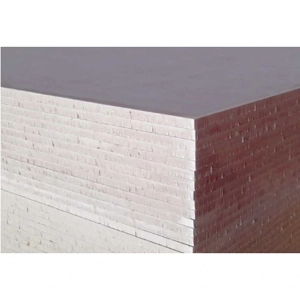
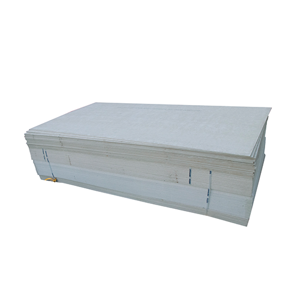
Fiber Cement Siding — Manufacturers supply long-lasting exterior finishing products combining cement with synthetic fibers. These low-maintenance, weather-resistant, and fire-resistant goods are appropriate for the UAE's climate.
To install cement board on a floor: prepare substrate clean and level, apply thinset mortar with notched trowel, place cement boards with staggered joints leaving 1/8-inch spaces, fasten with corrosion-resistant screws every 6-8 inches, tape joints with fiberglass mesh, apply more thinset over seams, and cure 24 hours before tiling. Use 1/4-inch for countertops, 1/2-inch for floors over plywood, and 5/8-inch for floors over joists.
Initial set: 30-45 minutes. Final set: 10-12 hours. Concrete reaches 70% design strength in 7 days and 90% in 28 days. The hot weather in Dubai speeds up evaporation, necessitating regular water curing or curing compound applications. Await heavy loads for 24-48 hours, vehicle traffic for 7 days, and complete structural loading for 28 days.
Use masonry fasteners: adhesive hooks for frames under 5 kg, plastic expansion anchors for 5-20 kg, and threaded masonry anchors for over 20 kg. Mark positions carefully, use a level to ensure alignment, and drill a bit smaller than the anchor diameter. Do not drill near edges or thin wall portions to avoid cracking.
Specialized cement suppliers in the UAE such as Canvas General Trading LLC (Al Quoz, Dubai, +971 50 226 8289) and SM & Rahmani Building Materials Trading LLC (Deira, Dubai, +971 54 586 7752) offer surface bonding cement with fiberglass reinforcement for sturdy block walls without mortar.
Install waterproof membrane beneath boards, use thinset mortar to adhere boards to studs, fasten with galvanized screws, seal seams with waterproof tape and thinset, apply waterproofing membrane over boards before tile. Leave 1/4-inch gap at tub/shower pan caulk joint, stagger joints, and install boards horizontally to minimize seams.
Replace broken fasteners, patch gaps with exterior caulk, secure loose panels with additional corrosion-resistant siding nails or screws, repaint if needed. Check for underlying frame deterioration or moisture damage. New fasteners should penetrate studs by at least 1-1/2 inches.
Depending on mix design, 5-6 bags of 50 kg cement are needed per cubic yard of concrete. Standard 1:2:3 mix requires about six bags per cubic yard. One cubic yard equals approximately 0.76 cubic meters, and normal concrete needs 300-400 kg of cement per cubic meter.
Yes, using thinset mortar and screws penetrating studs behind, cement board can be put over drywall in non-wet regions. In wet areas (showers, tub surrounds), it is best practice to remove drywall and apply cement board directly to studs. Use 1-1/4-inch screws to reach studs, apply thinset mortar, and seal all joints.
No. CPVC pipes require special CPVC cement or universal PVC/CPVC cement designed for higher temperatures. PVC has a limit of 60°C (140°F); ordinary PVC cement degrades at CPVC operation temperatures up to 93°C (200°F). Improper cement use voids warranties and risks pressure failures.
Use chemical paint remover (apply, wait 15-30 minutes, scrape, rinse), a pressure washer with 3000-4000 PSI, or mechanical methods like sandblasting or grinding with coarse abrasive discs. Dubai's heat speeds up chemical stripper efficiency but promotes evaporation, so work in sections keeping the substance wet.
Best options: engineered hardwood with moisture barrier, polished concrete, ceramic/porcelain tile, epoxy coating, or luxury vinyl plank. Basements should avoid solid hardwood, laminate, or carpet due to moisture sensitivity. Luxury vinyl and epoxy offer the best blend of durability, moisture resistance, and aesthetics.
No. Masonry cement lacks the adhesive polymers, flexibility, and water resistance of thinset. Thinset adds latex or polymer additives for strong tile bonds, heat mobility, and moisture prevention. Using masonry cement leads to poor adhesion, cracking, and final failure, especially in wet areas.
Compaction is mechanical compression of soil/aggregate voids using rollers, tampers, and vibrators — a reversible physical process. Cementation is a chemical bonding process where minerals precipitate between particles to form solid rock — forming long-lasting chemical bonding. Both are necessary: compaction prepares substrates, cementation produces structural materials.
Kill moss with herbicide or 1:1 white vinegar/water solution, scrape off dead moss with wire brush or pressure washer, clean cracks, allow to dry thoroughly, fill with cement patch compound or concrete repair caulk. Apply bleach solution (1:10 bleach to water) to eradicate leftover spores, then seal cracks to stop regrowth.
No scratch coat is needed for tile installation as thinset adheres directly to the textured surface. For plastering over cement board, a scratch coat is necessary. Use a notched trowel (1/4 x 1/4-inch for wall tile, 1/2 x 1/2-inch for large format) for tile applications. Conventional plastering requires applying a scratch coat with square trowel, scratching horizontally, and curing 24-48 hours before final coat.
Tiled shower floors require either pre-sloped foam panels with thinset overlay or slope-forming mortar base (sand-cement deck mud). Traditional method: dry-pack mortar (4-5 parts sand to 1 part cement) over a waterproof membrane sloped 1/4 inch per foot toward drain. Modern method: lightweight pre-sloped shower bases. Tile is bonded to cured mortar bed or pre-formed base using thinset cement, not ordinary cement, for a watertight assembly.
Successful building projects are ensured by knowing the cement pricing in the United Arab Emirates and locating trustworthy cement suppliers in the country. The UAE provides extensive supply infrastructure, whether you're looking for bulk cement suppliers for major projects, affordable Ultratech cement prices, or cement bag prices of 50 kg.
Reputable suppliers that supply high-quality materials for residential, commercial, and infrastructure construction include Canvas General Trading LLC (Al Quoz, Dubai, +971 50 226 8289), QCON General Trading LLC (Al Quoz, Dubai, +971 56 409 0966), SM & Rahmani Building Materials Trading LLC (Deira, Dubai, +971 54 586 7752), Al Dereya Scaffolding Trading LLC (Ajman, +971 50 278 4566), and Smooth Technical Trading (Abu Dhabi, +971 50 826 7792).
The construction materials industry offers complete solutions, ranging from OPC cement suppliers in the UAE to specialty fly ash suppliers, ready mix concrete suppliers nearby, and concrete block suppliers nearby. Contact reputable suppliers for competitive pricing, dependable delivery, and technical support to ensure project success across cement for house construction, cement for road construction, and cement for bridge construction applications throughout the United Arab Emirates.