
Stack a scaffold frame or tube higher than one section and you need something inside the joint holding those two lengths dead in line - that's the joint pin. It's small, it's cheap, and it's exactly the kind of part that gets ordered as an afterthought right up until a wobbly stacked joint makes someone stop and ask where the pins are. This guide covers the real types of scaffolding joint pins sold in the UAE, verified specs from an actual supplier listing, and what to check before you order.
A joint pin sits inside two tube or frame ends, keeping them coaxial (dead straight, not offset) while a separate fixing - a bolt, cotter pin, or gravity clip - locks the joint so it can't pull apart or twist under load. It doesn't carry the full structural load itself on most designs; its job is alignment and connection security, which is exactly why using the wrong type, or skipping it altogether, shows up as a wobbly, out-of-true stacked joint rather than an obvious failure.
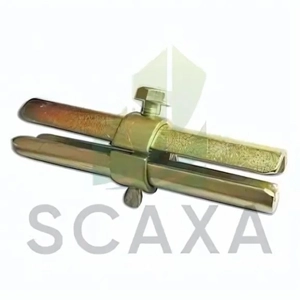
An external pin with a fixed collar or "drophead" that seats on top of one tube end while the pin itself slides into the tube below, commonly used to stack frame scaffold sections and props vertically. The drophead makes it self-locating during erection, which is why it's the standard choice for frame-and-brace towers rather than tube-and-fitting scaffolds.
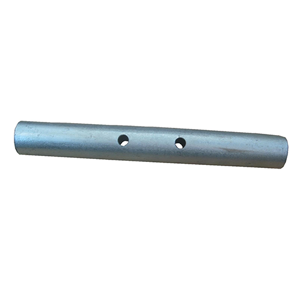
Sits entirely inside the tube ends of a standard 48.3mm tube-and-clamp system, with a central bolt that expands internal plates for grip once tightened. Built for non-load-bearing extensions - lengthening standards, ledgers, and handrails - rather than critical structural joints, which should use an external sleeve coupler instead.
A fixed spigot pin welded or pressed into a system scaffold standard, connecting one standard to the next in Cuplock or Ring Lock towers. Comes in square or round profile - square spigots resist rotational movement better under heavy slab-casting loads, while round spigots are the more economical, easier-to-install default for standard access scaffolding.
Stacking frame scaffold sections or props to reach height? Spigot connector with a drophead. Extending a tube-and-clamp standard, ledger, or handrail on a non-structural run? Internal expandable joint pin. Building a Cuplock or Ring Lock system tower? Use the fixed spigot pin that matches that specific manufacturer's system - square profile if heavy slab-casting stability matters more than easy handling.
| Specification | What to Look For |
|---|---|
| Outside Diameter | Standard 48.3mm OD to match standard scaffold tube and frame legs - confirm it matches your existing stock exactly |
| Finish | Zinc-plated (electro-galvanized) steel is the common UAE stock finish; hot-dip galvanized costs more but resists coastal humidity noticeably longer |
| Standard Compliance | EN74B (and BS1139 Part 2 Section 2) are the most commonly referenced standards for tube-and-fitting joint pins in the UAE market |
| Drophead Weight | A concrete data point for comparing similar pins across suppliers - roughly 1kg is typical for a standard 48.3mm drophead spigot |
| Manufacturing Process | Drop-forged pins offer higher strength than pressed steel equivalents, worth the premium for heavy-duty or repeated-use stock |
Zinc-plated joint pins are the standard stock finish across UAE suppliers, but plating alone can wear through faster than hot-dip galvanizing on pins that get repeatedly hammered in and knocked out during frame erection. For rental stock that goes through dozens of erect/dismantle cycles, the extra cost of hot-dip galvanized pins usually pays for itself in reduced replacement frequency.
Below are established scaffolding joint pin suppliers and manufacturers serving Dubai, Sharjah, Abu Dhabi and the Northern Emirates, with real listed specifications pulled from verified catalogues.
Al Naseeha lists a dedicated Spigot Connector / Joint Pin sized to the standard 48.3mm tube diameter, with a documented EN74B standard reference and drophead weight - a level of specification detail that makes it straightforward to check against a submittal requirement rather than relying on a general description.
Best For: Documented EN74B ComplianceWhy contractors choose them: the EN74B standard reference and exact drophead weight are both spelled out on the listing itself, which is genuinely useful when a project's documentation needs a specific standard cited rather than a general "compliant" claim.
Ascend manufactures frame scaffold components in-house, including the ladder frames and bracing sections that joint pins are used to stack - a practical fit for contractors who want joint pins sourced from the same manufacturer as the frames they're connecting, removing any doubt about fit tolerance between mismatched brands.
Best For: Matching Pins to Ascend Frame SystemsWhy contractors choose them: sourcing the joint pin from the same manufacturer as the frame it stacks removes the guesswork of matching diameters and drophead fit across mixed brands on a single tower build.
Contact hours, exact stock and current pricing vary by supplier - always confirm outside diameter, finish, and standard compliance for the specific batch you're buying before placing a bulk order.
Usually means the pin diameter is a fraction loose for the tube, or the internal expanding plates on an expandable pin haven't been tightened fully. Fix: confirm exact 48.3mm fit at purchase, and check the tightening bolt on expandable pins is torqued properly, not just finger-tight.
Zinc plating can wear through at the insertion point after repeated erect/dismantle cycles, letting rust take hold and seize the pin in place. Fix: inspect pins for surface rust before each reuse, and consider hot-dip galvanized stock for pins going through frequent rental cycles.
An internal expandable joint pin is rated for non-load-bearing extensions, not critical structural connections - using one where a load-bearing sleeve coupler is needed is a real safety gap. Fix: confirm with the scaffold design which joints are load-bearing, and use external sleeve couplers there instead of an internal joint pin.
A drophead spigot without its cotter pin, gravity clip, or bolt securing it can lift or shift under lateral load. Fix: stock spare locking fixings alongside the pins themselves, and check every stacked joint has its securing fixing in place during routine inspections.
Indicative per-piece ranges by type and finish - always request a written quote for your exact spec and quantity.
| Joint Pin Type | Zinc Plated (AED) | Hot-Dip Galvanized (AED) |
|---|---|---|
| Spigot Connector / Drophead Pin | AED 18 – 30 | AED 32 – 50 |
| Internal Expandable Joint Pin | AED 15 – 25 | AED 28 – 40 |
| Cuplock/Ring Lock Spigot Pin (Round) | AED 20 – 35 | AED 38 – 55 |
| Cuplock/Ring Lock Spigot Pin (Square) | AED 25 – 40 | AED 42 – 60 |
Indicative price ranges for reference only - actual quotes vary by order volume, finish, current steel prices, and the specific supplier.
Since one pin is needed at every stacked joint, tower and frame builds typically need joint pins in bulk far more than most other accessories. Specify the exact pin type, diameter, and finish up front so the supplier can quote an accurate bulk rate rather than a generic per-piece estimate.
Joint pins are almost never ordered alone - most builds pull in a few of these related components too.
In everyday UAE supplier language these terms are used interchangeably - both describe a pin used to connect two tube or frame leg ends vertically. Where a distinction is drawn, "spigot" more often refers to the external drophead type used on frame scaffolding, while "joint pin" is sometimes used specifically for the internal expandable type on tube-and-clamp systems.
48.3mm outside diameter is the UAE/GCC standard, matching standard scaffold tube and frame leg diameter. Confirm this matches your existing tube or frame stock exactly before ordering, since a mismatch prevents a secure fit.
It depends on the type. Drophead spigot pins on frame scaffolding do carry structural load as designed. Internal expandable joint pins on tube-and-clamp systems are generally rated for non-load-bearing extensions only - critical structural joints should use an external sleeve coupler instead.
Square spigot pins provide better alignment stability and resist rotational movement, making them the better choice for heavy slab-casting and high-load applications. Round spigot pins are more economical and easier to install, making them the standard default for general access scaffolding.
Yes - since a pin is needed at every stacked joint, tower and frame builds typically need joint pins in significant quantity. Specify the exact pin type, diameter, and finish up front so the supplier can quote an accurate bulk rate.
Comparing scaffolding joint pin suppliers in Dubai, Sharjah or Abu Dhabi? Reach out directly to the suppliers listed above for current stock, specs, and bulk pricing.

 0
0