








Pneumatic Grinder Suppliers in KSA - Find the Right Air Grinder Suppliers for Your Job in Saudi Arabia
Looking for a pneumatic grinder in KSA? This page lists verified suppliers in Riyadh and the Eastern Province stocking air die grinders, pneumatic angle grinders, and straight pneumatic grinders for fabrication, maintenance, and industrial use.
Whether you need a die grinder for precision metal finishing, an angle grinder for weld removal and heavy cutting, or an industrial grade grinder for continuous production work, these suppliers carry standard and heavy duty models across KSA.
All listed suppliers offer fast delivery across KSA, competitive trade pricing, and support for bulk or project based orders. Many are certified distributors of brands like Chicago Pneumatic, Ingersoll Rand, AIRCAT, and Wadfow.
Contact a supplier directly to confirm stock, get a price quote, or identify the right pneumatic grinder type and CFM rating for your compressor and application.
- Air die grinder suits precision detail grinding, deburring, and finishing in tight spaces
- Pneumatic angle grinder handles heavier cutting, weld removal, and surface grinding work
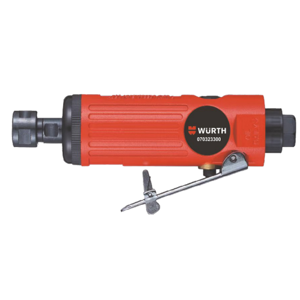
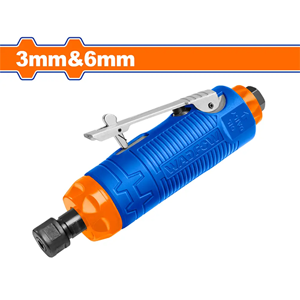
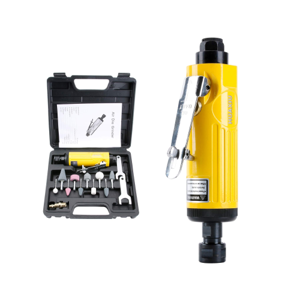
- Straight pneumatic grinder gives long reach access inside pipes, tanks, and welded joints
- Heavy duty and industrial pneumatic grinders are rated for continuous production and oil and gas use
- Match grinder CFM and PSI demand to your compressor before buying, undersized air supply causes stalling
- Pneumatic grinder prices in KSA: SAR 150 (basic air die grinder) to SAR 2,500+ (industrial Ingersoll Rand and Chicago Pneumatic models)
- Brands stocked in KSA: Chicago Pneumatic, Ingersoll Rand, AIRCAT, Wadfow, Digital Craft, Kobmax, Total
Pneumatic Grinder Suppliers in KSA for Metal Fabrication and Workshop Use
Three verified suppliers in Riyadh stocking air die grinders, pneumatic angle grinders, and grinder accessories for fabrication shops and general workshop use.
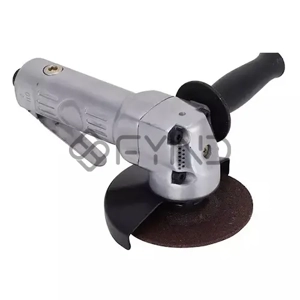
United Generation Future Trading Company - Air Die Grinder and Angle Grinder Supplier, Riyadh
Jodah Sustainable Quality Supply and Services - Heavy Duty Pneumatic Grinder Supplier, Riyadh
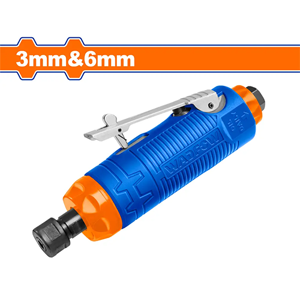
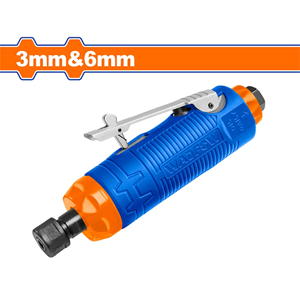
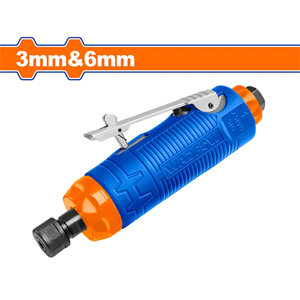
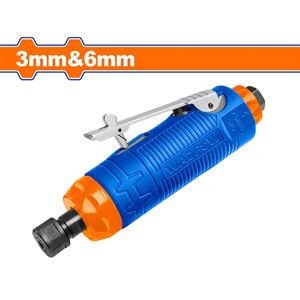
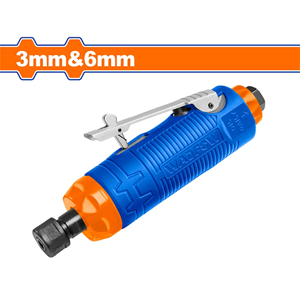
Wadfow Tools - Pneumatic Angle Grinder and Air Die Grinder Supplier, Riyadh
More Pneumatic Grinder and Air Die Grinder Suppliers in Riyadh
Additional verified suppliers covering carpentry and joinery work, construction site supply, and grinders paired with safety accessories.
Carpentry House Trading Company - Air Die Grinder Supplier for Wood and Metal Finishing, Riyadh
Masmar Al Tasheed Trading Establishment - Pneumatic Grinder Supplier for Construction Sites, Riyadh
Care And Protection Trading Establishment - Pneumatic Grinder with Safety Accessories, Riyadh
Remaining Pneumatic Grinder Suppliers in Riyadh for Industrial Equipment and Precision Tooling
Two further verified suppliers covering heavy industrial equipment and precision die grinder work for tool and die shops.
Al Hazm Establishment For Industrial Equipment - Heavy Duty Pneumatic Grinder Supplier, Riyadh
Special Tools Company - Precision Pneumatic Die Grinder Supplier, Riyadh
Authorized Pneumatic Grinder Brand Distributors in Dammam and Al Khobar, Eastern Province
For genuine brand stock and factory warranty support, these two Eastern Province distributors carry official Chicago Pneumatic and Ingersoll Rand ranges.
General Tech Shop - Chicago Pneumatic Authorized Distributor, Dammam
HFI (HAKA For Industry) - Ingersoll Rand Authorized Dealer, Al Khobar and Riyadh
Pneumatic Grinder Type Guide - Die Grinder, Angle Grinder, and Straight Grinder for KSA Buyers
Match the grinder type to the job before contacting a supplier. The wrong type wastes time and wears out faster.
Air Die Grinder for Precision Metal Finishing, Deburring, and Detail Work
Small, high RPM, and light in the hand. The standard choice for deburring welds, cleaning castings, and detail grinding in tight spots.
- 1/4 inch collet size is most common, fits the small mounted points and burrs sold across KSA
- The Chicago Pneumatic CP860 runs a 0.5 HP motor to 24,000 RPM free speed and draws around 21 CFM at load, stocked
- The Kobmax 1/4 inch die grinder, available from Carpentry House Trading Company, sits in a lighter trade class around 18,000 to 22,000 RPM and 4 to 5 CFM, a sensible step down where continuous duty is not needed
- SAR 150 to SAR 800 depending on brand and RPM rating
Pneumatic Angle Grinder for Heavy Cutting, Weld Removal, and Surface Grinding
Built for bulk material removal. This is the size most fabrication and construction crews reach for first.
- Common wheel sizes are 4 inch (100mm), 5 inch (125mm), and 7 inch (180mm)
- The AIRCAT 6340-A spins a 4-1/2 inch wheel at 11,000 RPM from a 1 HP motor and needs only 6 CFM
- The Ingersoll Rand 3445MAX class, carried through HFI and the wider Ingersoll Rand range at Jodah Sustainable Quality Supply and Al Hazm Establishment
- SAR 300 to SAR 1,500 depending on wheel size and duty rating
Heavy Duty Pneumatic Grinder for Metal Fabrication with Safety Throttle
Look for a lock-off safety lever before buying for shop floor use. It stops the wheel from spinning if the tool is dropped or bumped.
High RPM Pneumatic Grinder for Stainless Steel and Carbon Steel Work
Stainless and carbon steel need higher RPM and a harder wheel grade to cut cleanly without burning the surface.
Straight Pneumatic Grinder for Long Reach Access in Pipes, Tanks, and Joints
The extended shaft reaches inside tanks, pipe interiors, and narrow welded joints where a standard die grinder cannot fit.
- Used for internal weld grinding and pipe joint finishing in fabrication shops
- Often paired with extended mounted points or small flap wheels
- SAR 200 to SAR 900 depending on shaft length and motor power
Compact and Mini Pneumatic Grinder for Tight Spaces in Automotive and Marine Work
Lighter housing and smaller head size for working inside engine bays, confined ship compartments, and tight fabrication corners.
- Reduces operator fatigue on long shift work, common request from body shops
- Pairs well with low vibration handle design for repeated daily use
- Available from Wadfow Tools and Special Tools Company in Riyadh
| Grinder Type | Best Use | Not Suited For | KSA Price |
|---|---|---|---|
| Air Die Grinder | Deburring, detail finishing, mold and die work | Bulk material removal, large welds | SAR 150-800 |
| Pneumatic Angle Grinder | Weld removal, surface grinding, structural steel | Tight internal access, fine detail work | SAR 300-1,500 |
| Straight Pneumatic Grinder | Pipe interiors, tank work, narrow joints | Heavy stock removal on open surfaces | SAR 200-900 |
| Heavy Duty / Industrial Grinder | Continuous production, oil and gas, shipyards | Light occasional home use | SAR 600-2,500+ |
| Compact / Mini Grinder | Engine bays, marine compartments, body shops | Heavy industrial stock removal | SAR 180-700 |
Pneumatic Grinder Models and Technical Specifications Available in KSA
Knowing the real numbers behind a model name makes it easier to pick the right tool and avoid paying for power you do not need. Here is what the most requested models in KSA actually deliver, and which suppliers carry them.
Air Die Grinder Specifications - RPM, Collet Size, and Air Consumption
The Chicago Pneumatic CP860, stocked by United Generation Future Trading Company, Carpentry House Trading Company, and the authorized General Tech Shop in Dammam, runs a 0.5 HP vane motor to a free speed of 24,000 RPM through a 1/4 inch collet.
At full load it draws around 21 CFM, though average consumption during normal use sits closer to 10.5 CFM, so a small single-cylinder compressor rated for at least 4 CFM continuous output can usually keep it running.
It weighs about 0.6 kg and measures 146mm end to end, light enough for one-handed work cleaning tyre moulds, porting engine intakes, and deburring small castings.
Kobmax's 1/4 inch air die grinder, available from Carpentry House Trading Company, sits in a lighter trade class, typically running 18,000 to 22,000 RPM and drawing 4 to 5 CFM.
It will not match the CP860 on continuous duty work, but for a shop that grinds in short bursts rather than all day, the lower price is hard to argue against.
- If your compressor cannot sustain at least 4 CFM continuously, an entry trade die grinder will hold its RPM better than a CP860, which needs more air to reach its rated speed
- A 1/4 inch collet fits the large majority of mounted points, burrs, and sanding accessories sold in KSA, so collet size rarely limits your accessory choice
- Vibration on the CP860 is rated at 3.7 m/s², worth checking against your site's occupational exposure limits if operators run the tool for full shifts
- Sound pressure on this class of die grinder typically falls around 92 to 93 dB(A), factor that in if several grinders run in the same enclosed bay
Pneumatic Angle Grinder Specifications - Wheel Size, RPM, and CFM Demand
The AIRCAT 6340-A, carried by United Generation Future Trading Company, Masmar Al Tasheed Trading Establishment, and Special Tools Company, fits a 4-1/2 inch wheel on a 5/8 inch-11 spindle and spins at 11,000 RPM from a 1 HP motor.
It needs only 6 CFM, modest for a tool this size, and weighs about 1 kg, helped along by a spindle lock for fast wheel changes and a 360 degree rotational exhaust that keeps dust off the operator.
AIRCAT backs it with a two-year warranty, worth factoring in when comparing total cost against cheaper trade brands that offer shorter cover.
Ingersoll Rand's 3445MAX class, available through HFI and the wider Ingersoll Rand range carried by Jodah Sustainable Quality Supply and Al Hazm Establishment For Industrial Equipment, runs the same 4-1/2 inch wheel size at a faster 12,000 RPM and a stronger 0.88 HP, but it needs 41 CFM at 90 PSI, nearly seven times the AIRCAT's air draw.
That CFM jump matters in practice: a compressor sized for one or two AIRCAT-class grinders will not keep an Ingersoll Rand MAX-class tool at full power if several air tools are running off the same line at once.
- Confirm wheel thread size before ordering replacement wheels, 5/8 inch-11 is the common spindle thread on 4.5 inch and 5 inch grinders but always check with the supplier first
- An internal governor, built into the Ingersoll Rand MAX series, maintains RPM under load rather than letting the tool slow down mid-cut, useful on harder materials and thicker stock
- A locking lever throttle reduces trigger fatigue on long grinding runs and is standard on most industrial grade angle grinders sold in KSA
- Weight differences matter over a shift, the AIRCAT 6340-A at roughly 1 kg is noticeably lighter in the hand than the IR 3445MAX class at around 1.5 kg
Pneumatic Grinder for Metal Fabrication and Welding Work in KSA
Fabrication and welding are the two most common reasons buyers in KSA search for a pneumatic grinder. Pick the right wheel and tool size for each stage of the job rather than trying to make one grinder cover everything.
Pneumatic Grinder for Metal Fabrication, Deburring, and Surface Preparation
Most Riyadh fabrication shops keep two tools on the bench rather than asking one to do both jobs.
A 5 inch pneumatic angle grinder, in the AIRCAT or Ingersoll Rand class described above, handles initial edge prep on cut steel plate before welding, while a 1/4 inch air die grinder such as the CP860 takes over for deburring brackets, flanges, and machined parts once the rough cut is done.
- Flap discs remove mill scale and surface rust faster than standard grinding wheels on raw stock, and they last longer than fibre discs on extended runs
- A straight pneumatic grinder, running similar RPM to a die grinder but with an extended shaft, reaches inside box sections and channel profiles an angle head cannot access
- Keep a spare wheel and disc set on hand, fabrication shops burn through abrasives faster than they wear out the tools themselves
- Check CFM draw against your compressor rating first if the grinder feels weaker than its RPM rating suggests, an undersized compressor is the most common cause, not a faulty tool
Pneumatic Grinder for Weld Removal, Weld Cleaning, and Weld Finishing
A 7 inch angle grinder, available from Masmar Al Tasheed Trading Establishment and the Eastern Province distributors, strips excess weld bead fast on thick structural joints thanks to a larger wheel and a higher CFM draw than a 4 or 5 inch model.
For finer weld cap blending where the surface needs a smooth transition into the base metal, switch down to a 4 inch grinder, which gives more control and removes less material per pass.
- Stainless and TIG welds need a lighter touch, run lower RPM where the tool allows to avoid discoloring the heat affected zone
- Use a straight grinder or an extended shaft die grinder for the inside corner of a fillet weld where an angle head cannot sit flat
- Carbide burrs mounted on a die grinder clean out porosity and slag pockets before re-welding a joint, faster than trying to grind it flat with a wheel
- Match wheel grade to the weld material, a wheel rated for carbon steel will dull noticeably faster on stainless and may leave embedded particles that cause later staining
Pneumatic Grinder for Surface Restoration, Rust Removal, and Edge Finishing
Surface work needs a lighter touch than rough fabrication. The goal is a clean, even finish without removing more base metal than necessary.
Pneumatic Grinder for Rust Removal and Paint Removal Before Coating Work
A flap disc on a 4 or 5 inch angle grinder strips rust and old coating without removing much base metal, which is why fabrication and maintenance teams reach for it before re-coating steelwork.
Wire cup brushes mounted on a die grinder clear rust from corners, weld toes, and recessed areas that a flat disc cannot reach.
- Light surface rust needs less aggressive grit than pitted or flaking corrosion, match the grit to the condition rather than defaulting to the coarsest disc available
- Remove old paint and primer down to bare metal, trapped coating under new paint is a common cause of early lifting and blistering
- Prime the same day where possible, bare steel exposed to humid coastal air in the Eastern Province can start oxidizing within hours
- A right angle grinder gives better control than a straight grinder on flat panel edge work since the offset head sits flatter against the surface
Pneumatic Grinder for Edge Finishing and Surface Smoothing on Fabricated Parts
A die grinder fitted with a fine grit mounted point blends sharp cut edges before powder coating, where any roughness shows through the finish coat.
Step through progressively finer grits rather than jumping straight to a polishing wheel, it takes less total time than fixing a poor finish after the fact.
- Surface smoothing on visible welds matters more on parts that will be painted, chrome plated, or left exposed in a finished assembly
- Check edge finish under direct light before sign-off, shadows under workshop lighting hide low spots that daylight reveals immediately
- Special Tools Company stocks variable speed die grinders specifically for this kind of finishing work where control matters more than raw RPM
Pneumatic Grinder for Automotive, Marine, and Offshore Applications in KSA
Tool choice changes a lot between an automotive bay and a coastal shipyard. Match housing material and tool size to the working environment, not just to the job at hand.
Pneumatic Grinder for Automotive Workshops and Vehicle Body Repair
Body shops generally prefer a compact, low vibration angle grinder, in the AIRCAT 6340-A class described above, since panel work means holding the tool for hours at a stretch.
A small air die grinder running 20,000 RPM or higher handles filler sanding and bracket finishing inside tight engine bay spaces where a larger tool will not fit.
Wadfow Tools and similar Riyadh trade suppliers stock entry-level angle and die grinder pairs specifically priced for body shop budgets.
- A 4 inch grinder gives more control on curved bodywork than a 7 inch model, the smaller wheel follows panel contours more easily
- Lighter tools matter more here than in heavy fabrication, since most repair work is held overhead or at awkward angles for extended periods
- Keep a dedicated grinder for paint and filler work separate from heavy metal grinders, cross-contamination of metal grit into filler dust shows up as visible defects in the paint finish
Pneumatic Grinder for Shipyards, Marine Maintenance, and Offshore Platforms
Salt air and humidity wear down a standard tool housing faster than an inland workshop ever would, so the first decision for marine and offshore buyers is housing material, not horsepower.
Al Hazm Establishment For Industrial Equipment and the Eastern Province distributors stock corrosion resistant housings specifically rated for coastal and offshore conditions, worth requesting by name when ordering rather than assuming a standard model will hold up the same way.
- Run maintenance and lubrication on a tighter schedule than inland sites, moisture reaches internal seals faster in humid coastal air
- Straight pneumatic grinders are useful for grinding inside ballast tanks and confined compartments where an angle head cannot maneuver
- Confirm the supplier stocks spare vanes and seals locally rather than importing them on request, offshore downtime waiting on a part is far more costly than the part itself
Corrosion Resistant Pneumatic Grinder for Shipyards and Offshore Platforms
Ask specifically for a corrosion resistant grade when ordering from Al Hazm Establishment or other Eastern Province industrial suppliers, since the standard version of most models looks identical on the shelf but uses different internal coatings and seal materials.
Pneumatic Grinder for Construction, Manufacturing, and Industrial Maintenance
Site work and plant maintenance both demand grinders built to run for full shifts without breaking down, a different category from occasional-use trade tools.
Pneumatic Grinder for Construction Sites and Structural Steel Work
7 inch angle grinders, the largest common wheel size, handle heavy stock removal on structural beams and steel sections faster than smaller tools, though they also draw the most CFM of any grinder class covered on this page.
Site conditions mean dust and grit reach tools fast, so a sealed housing model, the kind Masmar Al Tasheed Trading Establishment stocks for construction accounts, holds up longer than an open vane design on active sites.
- Heavy duty grinders with continuous duty ratings suit crews running tools for full shifts rather than occasional use
- Confirm delivery coverage for the actual project location before ordering, not every Riyadh supplier reaches every site at the same speed
- Bulk project orders usually qualify for better per-unit pricing than single tool purchases, worth asking about even for mid-sized orders
Pneumatic Grinder for Manufacturing, Production Lines, and Plant Maintenance
Continuous duty pneumatic grinders, built for repeated daily use on a line rather than occasional jobs, are a different category from trade grinders even when the RPM figures look similar on paper.
Industrial grade housings, like those in the Ingersoll Rand range carried by Jodah Sustainable Quality Supply and HFI, are built to handle the heat cycling of multi-shift manufacturing environments without the internal wear that shortens a trade tool's life under the same workload.
- Keep a stock of spare parts on site, plant maintenance teams typically lose more time waiting on parts than fixing the tool itself
- Match CFM to your facility's compressed air system before standardizing on one grinder model across multiple teams, a model that works for one bay may starve for air on a line running several tools at once
- Suppliers offering credit accounts and project supply agreements suit ongoing maintenance contracts better than placing one-off purchase orders each time
Pneumatic Grinder by Material - Stainless Steel, Carbon Steel, Aluminum, and Cast Iron
The material being ground affects wheel choice, RPM, and how often you should expect to replace consumables, often more than the brand of the grinder itself.
Pneumatic Grinder for Stainless Steel and Carbon Steel Fabrication
Stainless steel needs higher RPM and a harder wheel grade than carbon steel to cut cleanly without burning or discoloring the surface, and letting it overheat during grinding can affect corrosion resistance right at the heat affected zone.
Carbon steel grinds faster but dulls a standard wheel quicker than stainless does under sustained heavy use, so expect a higher consumables cost on long carbon steel runs.
- Use wheels rated specifically for stainless to avoid iron contamination, cross-using a wheel between carbon steel and stainless work can cause surface staining that shows up later
- Heavier 7 inch grinders suit thick stainless plate where stock removal speed matters more than control
- Lighter 4 inch models suit thin gauge stainless sheet, where an aggressive tool would warp or distort the material
Pneumatic Grinder for Aluminum, Mild Steel, and Cast Iron Components
Aluminum loads abrasive wheels faster than steel does, so wheels rated for non-ferrous metal are worth the small price difference to avoid constant clogging mid-job.
Mild steel is the most forgiving material on this list, standard wheels and moderate RPM handle it without much thought, which is why it is the default test material most suppliers use to demonstrate a new grinder model.
- Cast iron produces fine abrasive dust, work in a ventilated area or with dust extraction where the facility allows it
- Lower RPM reduces the risk of gouging soft aluminum compared to running a tool at full speed
- Keep separate wheels for aluminum and steel work, cross-use shortens wheel life on both materials and risks contamination
Pneumatic Grinder Comfort, Safety, and Control Features for KSA Buyers
Operators running a grinder for a full shift care about more than raw power. These features reduce fatigue and improve cut accuracy, and they show up in the published spec sheet if you know what to look for.
Low Vibration, Low Noise, and Ergonomic Pneumatic Grinders for Long Shifts
Vibration exposure adds up over a full shift, which is why manufacturers publish a rating in m/s squared rather than leaving it to guesswork.
The CP860, for example, is rated at 3.7 m/s², worth checking against your site's exposure limits if operators run grinders for extended periods.
Lower noise output matters just as much in shared indoor workshops where several grinders run at once, sound pressure on tools in this category typically falls between 90 and 95 dB(A).
- Anti-vibration handle mounts, standard on most professional grade tools, measurably reduce hand fatigue over a full day of grinding
- Lightweight housings, like the AIRCAT 6340-A's roughly 1 kg weight, reduce shoulder strain on overhead or awkward angle work compared to heavier industrial models
- Rubberized grips improve control in humid conditions where hands sweat inside gloves, common on Eastern Province sites
- Ask suppliers for the published vibration and noise figures before buying if your site enforces occupational exposure limits, most distributors can provide the manufacturer datasheet on request
Variable Speed and Precision Pneumatic Grinders for Controlled Cutting
Variable speed triggers let one tool cover both rough cutting and fine finishing work, useful for shops that cannot justify a separate tool for every speed range.
Internal governors, the kind built into the Ingersoll Rand MAX series, maintain RPM under load automatically, which keeps cutting speed consistent rather than letting the tool bog down on harder material.
- Lower RPM settings reduce heat build up on stainless and other heat sensitive metals, worth using even if the tool can run faster
- Precision grinders with controlled RPM suit mold and die work where tolerances matter more than speed
- A locking throttle holds a set speed for repetitive tasks without ongoing trigger fatigue
- Adjustable speed models cost more upfront but reduce the need for separate rough and fine tools, often paying back the difference in reduced tool count
Why Choose a Pneumatic Grinder, and How to Keep It Running
Before buying, it helps to know why crews favor air tools over electric, and what keeps a grinder running reliably once it is on site.
Key Advantages of Pneumatic Grinders Over Electric Grinders
Air tools win on power-to-weight because there is no motor winding or battery pack adding bulk to the housing, which is also why the CP860 weighs barely more than half a kilogram despite its 24,000 RPM output.
The advantages go beyond weight, though, and matter most on the kind of demanding, full-shift work covered throughout this page.
- High power-to-weight ratio: no heavy motor or battery onboard, so the tool stays light over a full shift
- Stall resistance: internal governors like the one in the Ingersoll Rand 3445MAX keep the tool turning under load instead of stalling the way an electric motor can on a tough cut
- Safety: runs cool and does not spark internally, a real benefit around flammable materials and fuel storage areas common on oil and gas sites
- Simpler design: fewer electronic parts to fail, often cheaper to repair than an electric equivalent
- Consistent power: output stays steady as long as air supply is adequate, unlike a battery tool that fades as charge drops over a shift
Pneumatic Grinder Maintenance - Air Supply, PSI, CFM, and Daily Lubrication
Every model covered on this page is rated for a specific PSI and CFM combination, usually around 90 PSI, and running below that pressure is the most common reason a grinder underperforms its advertised RPM.
Add a few drops of pneumatic tool oil into the air inlet before each shift, this single habit extends motor life more than almost anything else an operator can do.
- Drain moisture from the air line regularly, water in the line wears the motor faster than dust does
- Undersized compressor CFM is the most common cause of a grinder feeling weak or stalling under load, check your compressor's continuous CFM rating against the tool's stated draw before assuming the tool is faulty
- Check air hose and fittings for leaks periodically, leaks reduce delivered pressure at the tool even when the compressor itself is working fine
- Store grinders with a light oil coating on exposed metal parts to prevent corrosion between uses, especially important given the Eastern Province's humidity
Pneumatic Grinder Brands, Sizes, Price Guide, and Buyer FAQs for KSA
Compare brands stocked across KSA, check sizing against your job, and find answers to the most common buying questions.
Pneumatic Grinder Brands Available from KSA Suppliers - Quick Comparison
| Brand | Type | Best For | Grade |
|---|---|---|---|
| Chicago Pneumatic | Die grinder / Angle grinder | General fabrication, precision finishing | Professional |
| Ingersoll Rand | Industrial grinder range | Oil and gas, continuous duty maintenance | Industrial |
| AIRCAT | Angle grinder | Structural steel, construction site grinding | Professional |
| Wadfow | Die grinder / Angle grinder | Automotive workshops, general trade use | Trade |
| Digital Craft (DSFD2) | Air die grinder | Detail and finishing work | Trade |
| Kobmax | 1/4 inch air die grinder | Fine detail grinding, carpentry and joinery | Trade |
| Total | Die grinder / Angle grinder | Construction and general contractor work | Trade |
Pneumatic Grinder Sizes and Price Guide - 4 Inch, 5 Inch, and 7 Inch Models in KSA
- 4 inch (100mm): lightest angle grinder size, used for rust removal, paint stripping, and light fabrication. SAR 300-700
- 5 inch (125mm): the most common trade size for general metal cutting and grinding. SAR 400-900
- 7 inch (180mm): heavier wheel for fast stock removal on large welds and structural steel. SAR 700-1,500
- Industrial and Ingersoll Rand grade models run higher, typically SAR 1,200-2,500 depending on size and motor power