
 0
0 
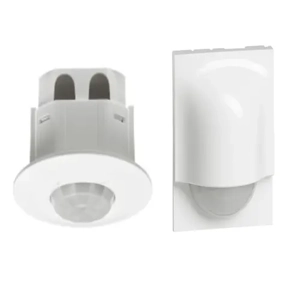

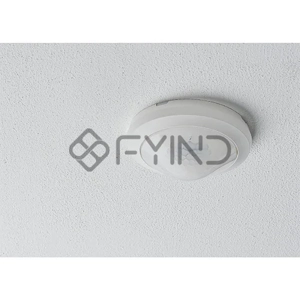

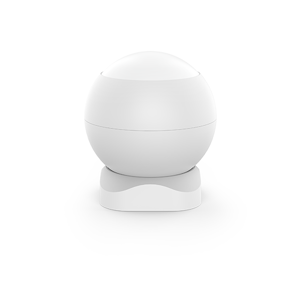
A passive infrared sensor or PIR sensor detects movement by sensing the heat a human body gives off and triggers a light, alarm, or camera automatically.
It is the most widely installed motion detection device in Saudi Arabia, used in villa driveways, office corridors, warehouse perimeters, and industrial facilities across Riyadh, Dammam, and Jeddah.
This directory lists verified PIR sensor suppliers in Saudi Arabia.
For related products see alarm systems, security cameras, motion detectors, access control systems, door sensors, and the full security surveillance and detection directory.
PIR Sensor Types Available in Saudi Arabia
Standard Indoor PIR Motion Sensor
Used for automatic lighting and intruder detection in offices, hotels, villas, and corridors.
Ceiling models cover a 6-12 metre radius; wall-mount models project 6-15 metres at 90-120 degrees.
The most commonly installed type across Saudi commercial and residential buildings.
Outdoor PIR Sensor - Temperature Compensated
Saudi summer ambient temperature reaches 45-50°C close to human body temperature, which causes standard indoor PIR sensors to false-trigger or stop detecting entirely outdoors.
Outdoor models for Saudi use must be IP65-rated with temperature compensation built in.
Honeywell, Bosch, and Paradox outdoor sensors include this.
Budget sensors without it will fail in Saudi summer conditions.
Dual Technology Sensor (PIR + Microwave)
Requires both PIR and microwave detection to trigger simultaneously.
Eliminates false alarms from AC air movement, heat sources, and small animals, the primary causes of nuisance alarms on Saudi industrial and outdoor sites.
Standard specification for warehouses, server rooms, and critical facilities in Jubail and Dammam.
Long Range PIR - Perimeter Security
Covers 20-100 metres for industrial compound and fence line security.
Curtain-type models detect anyone crossing a line rather than movement in a wide area.
Widely used in Jubail and Yanbu industrial facilities to trigger security cameras or thermal cameras on detection without continuous recording.
Wireless PIR Sensor
Communicates with an alarm panel by radio, no cable installation needed.
The practical choice for retrofitting security into existing Saudi villas and offices.
Must match the brand protocol of your alarm panel - Ajax works only with Ajax hub, Paradox wireless only with Paradox panels.
Occupancy Sensor - Lighting Automation
Wired to a lighting relay rather than an alarm.
Turns lights on when someone enters, off when the space is empty.
Required under Saudi SASO energy efficiency regulations for commercial buildings.
Payback period in large offices and corridors is typically 12-24 months on electricity savings.
Brands Available from Saudi Suppliers
Honeywell and Bosch are the standard specification for commercial and government buildings their dual-tech and outdoor models include temperature compensation suited for Saudi conditions.
Paradox is the most widely installed brand in Saudi residential security, with the NV5 and DG55 sensors available from most installers.
Ajax Systems covers the wireless and smart home segment with encrypted radio protocol and smartphone integration.
Texecom, DSC, Risco, and Crow are available through security wholesalers in Riyadh and Dammam for mid-market residential and commercial builds.
PIR Sensor Prices in Saudi Arabia
PIR Sensor Price Guide - Saudi Arabia (SAR)
| Product | Price (SAR) | Best For |
|---|---|---|
| Indoor PIR - Budget (generic) | 25 - 90 | Basic lighting control |
| Indoor PIR - Paradox / DSC / Crow | 80 - 220 | Residential alarm systems |
| Indoor PIR - Honeywell / Bosch | 180 - 450 | Commercial and government buildings |
| Outdoor PIR - Weatherproof IP65+ | 150 - 550 | Driveways, compound gates, external walls |
| Dual Technology PIR + Microwave | 280 - 750 | Warehouses, industrial, false-alarm-critical |
| Long Range PIR (20-100m) | 350 - 1,800 | Industrial perimeter, fence lines |
| Wireless PIR - Ajax / Paradox / DSC | 180 - 650 | Retrofit villas, no-cable installation |
| Occupancy Sensor - Lighting | 45 - 280 | Offices, corridors, energy automation |
Top Passive Infrared Sensor Suppliers in Saudi Arabia
Arabian Security Systems & Detection Co. - Riyadh, Second Industrial City
Riyadh - Second Industrial City
Authorised distributor for Honeywell and Bosch security products.
Covers the full range of passive infrared sensors, dual-tech detectors, and complete security systems including alarm systems, siren alarms, and access control systems.
Technical team advises on sensor placement and zone coverage for Saudi commercial and government projects.
Contact: +966 50 111 2233 | WhatsApp available
Gulf Detection & Security Systems LLC - Dammam, Second Industrial City
Dammam - Second Industrial City, Eastern Province
Eastern Province specialists for long-range PIR sensors, dual-tech detectors, and perimeter security systems serving oil, gas, and industrial facilities.
Familiar with ARAMCO and SABIC contractor security specifications.
Also supply gas detectors, safety light curtains, and thermal cameras.
Contact: +966 55 122 3344 | WhatsApp available
Jeddah Smart Security & Automation Est. - Al-Khalidiyah, Jeddah
Jeddah - Al-Khalidiyah Industrial Area
Ajax Systems distributor for the Western Province.
Wireless PIR sensors, occupancy sensors, and smart villa security packages integrating door sensors, door bells, and security cameras for remote monitoring without cable installation.
Contact: +966 56 133 4455 | WhatsApp available
FAQ - Passive Infrared Sensors in Saudi Arabia
Can a standard indoor PIR sensor be used outdoors in Saudi Arabia?
No.
Saudi summer ambient temperature reaches 45-50°C, which is close to body temperature, a standard indoor sensor loses the ability to distinguish a person from the background and either false-triggers constantly or stops detecting.
Outdoor installations in Saudi Arabia require a temperature-compensated IP65 model.
Honeywell, Bosch, and Paradox outdoor sensors include this; budget sensors without it fail in summer.
What causes a PIR sensor to keep false-triggering?
Indoors, the most common cause is an AC vent blowing warm air across the detection zone.
Outdoors, it is a sensor without temperature compensation installed in direct sun.
Switching to a dual-technology sensor which requires both PIR and microwave to trigger simultaneously, eliminates false alarms in almost all cases.
What is the detection range of a PIR sensor?
Indoor ceiling models cover 6-12 metre radius.
Wall-mount indoor sensors project 6-15 metres at 90-120 degrees.
Standard outdoor models reach 10-20 metres.
Long-range perimeter sensors cover 20-100 metres.
Using a standard indoor sensor to cover a 25-metre perimeter is a common mistake that creates undetected gaps in coverage.
Does a PIR sensor record what it detects?
No.
A PIR sensor produces only a trigger signal, it detects movement but records nothing and creates no image.
To record, pair it with a security camera that activates on the PIR trigger.
This is more efficient than continuous recording and much easier to review after an incident.
Will a wireless PIR sensor work with any alarm panel?
No.
Wireless PIR sensors use brand-specific radio protocols - Ajax works only with an Ajax hub, Paradox wireless only with a Paradox panel.
Wired sensors connect to any alarm panel.
Before buying wireless, send a photo of your existing alarm panel to the supplier and they will confirm compatibility.
What is the difference between a PIR sensor and a dual technology detector?
A PIR sensor fires on heat movement alone.
A dual-tech detector requires PIR and microwave to trigger at the same time, making false alarms from air movement, heat sources, and small animals practically impossible.
Dual-tech costs SAR 280-750 versus SAR 80-220 for a standard PIR.
For warehouses and industrial sites, the price difference pays for itself in avoided false alarm callouts.
What is the right PIR sensor for industrial sites in Jubail and Yanbu?
Standard residential PIR sensors are not suitable for large industrial perimeters.
Jubail and Yanbu petrochemical sites need long-range outdoor models with temperature compensation for fence coverage, and dual-tech sensors to prevent false alarms from industrial heat sources.
For classified hazardous areas, confirm with your safety officer whether intrinsically safe sensor specifications are required.
What is the difference between a PIR sensor and a thermal camera?
A PIR sensor outputs yes or no, it detects and triggers.
A thermal camera produces a continuous heat image for identification and recording.
PIR sensors cost SAR 80-550; thermal cameras cost SAR 2,000-25,000+.
They work together, not instead of each other - PIR detects, thermal camera identifies and records.
Related Security and Detection Products in Saudi Arabia
- Access Control System - card readers, biometric systems and door locks
- Alarm System - intruder alarm panels and zone detection
- Security Camera - IP and analogue cameras for recording
- Motion Detector - full range of motion detection technologies
- Door Sensor - magnetic contacts for door and window detection
- Siren Alarm - indoor and outdoor alarm sirens
- Gas Detector - fixed and portable gas detection
- Thermal Camera - heat imaging for perimeter security
- Panic Button - emergency alert for personal security
- Safety Light Curtain - optical barriers for machine protection
- Security Metal Detector - walk-through and handheld detection
- Camera Pole - mounting poles for outdoor cameras
- Door Bell - wired and wireless door stations
- Door Phone - audio and video intercom systems
- Safety Horn - high-volume alarm horns for industrial warning
- Video Monitor - monitors for security and access control
- Buzzer - alert buzzers for alarm systems
- Security Control System - centralised panels for security zones
- Locks, Security Hardware & Accessories - electronic locks and door hardware
- Security Surveillance & Detection - full directory of surveillance equipment KSA