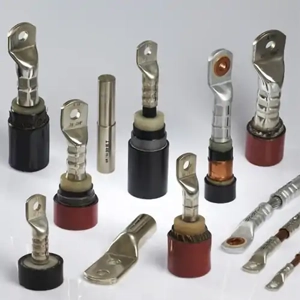
Find Cable Lug Suppliers in KSA Offering Copper, Aluminium, Bi-Metallic, Compression & Long-Barrel Lugs for Switchgear, Transformers, Power Feeders & Earthing
Cable Lugs - Reliable Electrical Terminations for Power, Industrial and Building Applications
Copper · Aluminium · Bi-Metallic · Mechanical · Compression · UL Listed · 10mm2-630mm2
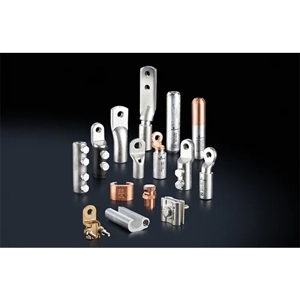
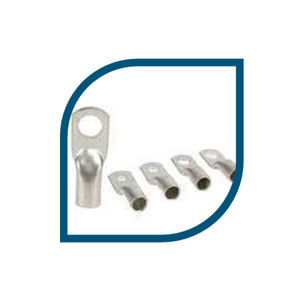
Cable lugs (also called cable lungs or terminal lugs) are the connectors used to terminate stranded or solid conductors onto busbars, switchgear, transformers, and equipment terminals. They come in copper, aluminium, and bi-metallic (copper-aluminium) constructions, in mechanical (bolted/split-bolt) and compression (crimped) types, and in sizes ranging from small 10mm2 control cable lugs up to heavy 630mm2 long-barrel lugs used on main power feeders. Choosing the right lug type, size, plating, and crimping method directly affects joint resistance, long-term reliability, and compliance with electrical inspection requirements on any project in the Kingdom.
Cable lugs are a small component with an outsized impact on electrical safety - a poorly matched or badly crimped lug is one of the most common causes of hot joints, nuisance tripping, and connection failures in low and medium voltage installations. Saudi Arabia's high ambient temperatures and dust exposure make correct lug selection, plating, and torque even more important than in milder climates, since a marginal joint that would survive in a temperate environment can overheat and fail here. Suppliers across Riyadh, Dammam, and the wider Kingdom stock everything from standard copper compression lugs to UL-listed bi-metallic lugs for aluminium-to-copper transitions, split-bolt connectors, and long-barrel lugs for heavy power cable.
Switchgear & Panel Terminations | Transformer Connections | Cable Risers & Feeders | Earthing & Bonding | Motor Control Centres | Aluminium-to-Copper Transitions
Switchgear & Distribution Panel Lugs - Reliable Low-Resistance Terminations (SAR 8-45/lug)
Distribution boards and switchgear panels typically use copper compression lugs in the 10mm2-95mm2 range for feeder and branch circuit terminations. Correctly sized and crimped lugs maintain low contact resistance under continuous load, preventing heat build-up inside enclosed panel spaces. Tin-plated copper lugs are commonly specified where corrosion resistance or aluminium-adjacent wiring is a concern. Typical panel project (40-60 terminations): SAR 500-2,500 for lugs alone, plus crimping tooling or contractor labour.
Transformer & Substation Connections - Heavy-Duty Long Barrel Lugs (SAR 60-350/lug)
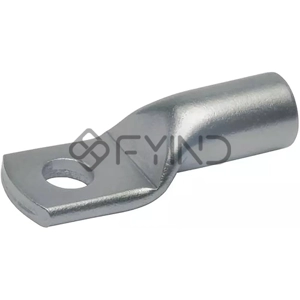
- Long barrel copper lugs (95mm2-630mm2): Extended barrel length distributes crimp pressure across more strands, improving mechanical strength and current-carrying capacity on heavy feeders. SAR 60-250 per lug depending on size.
- Bi-metallic lugs: Required wherever an aluminium conductor terminates onto a copper busbar or copper conductor, to prevent galvanic corrosion at the joint. SAR 90-350 per lug.
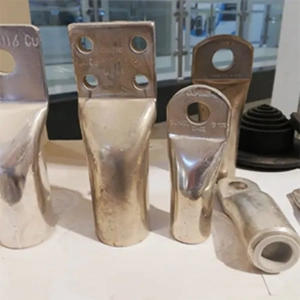
- Two-hole and four-hole pad lugs: Used on transformer bushings and busbar connections requiring a wider bolting pattern for vibration resistance. SAR 70-300 per lug.
- Torque and crimp verification: Manufacturer-specified crimp die and torque values must be followed and documented for substation and utility-grade installations.
Earthing, Bonding & Split-Bolt Connections (SAR 5-60/unit)
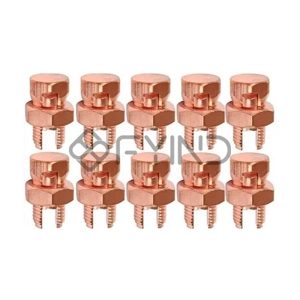
- Split-bolt connectors: Used for tap and splice connections in earthing conductors and bonding runs without requiring a full crimp termination. SAR 5-40 per connector depending on conductor size.
- Pin-type and ring-type lugs: Common on control panels, earthing bars, and instrumentation wiring where a bolted terminal connection is required. SAR 3-25 per lug.
- Corrosion protection: Anti-oxidant compound is typically applied on aluminium conductor terminations and outdoor earthing connections to prevent oxide build-up over time.
Cable Lug Types - Materials, Construction and Applications
Copper · Aluminium · Bi-Metallic · Mechanical · Compression · Split-Bolt · Long Barrel
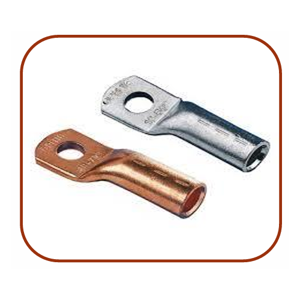
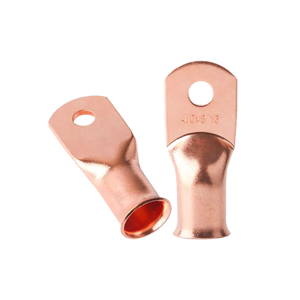
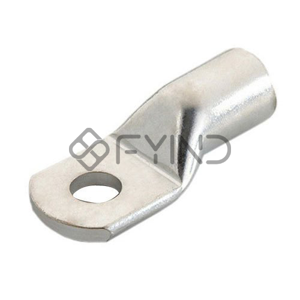
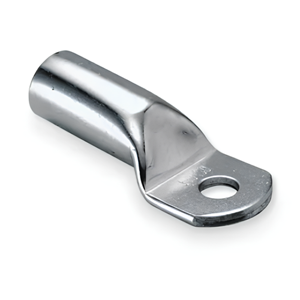
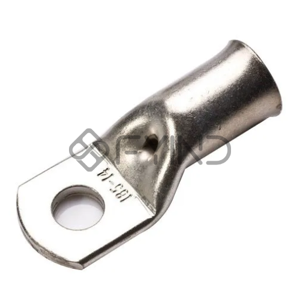
Copper Compression Cable Lugs (SAR 4-250)
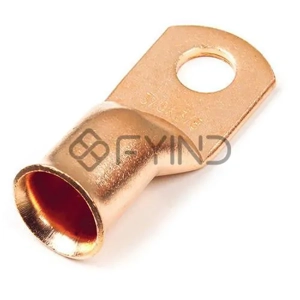
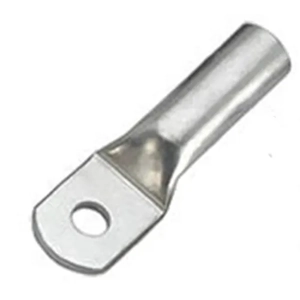
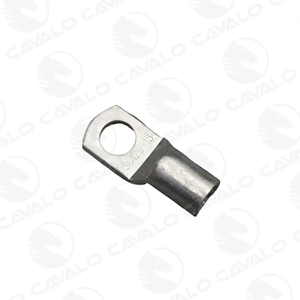
- Construction: Electrolytic grade copper barrel, seamless or brazed-seam tube, crimped onto stripped conductor strands using a hydraulic or hand crimping tool with matched die.
- Plating options: Bare copper (indoor, dry locations), tin-plated (corrosion resistance, outdoor or humid areas), silver-plated (specialist high-conductivity applications).
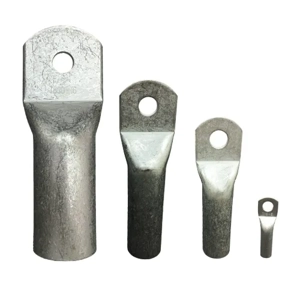
- Size range: Commonly available from 10mm2 control cable lugs up to 630mm2 long-barrel lugs for main power feeders.
- Typical application: Panel boards, switchgear, transformer connections, motor terminations, general LV/MV copper conductor terminations.
Aluminium Compression Lugs (SAR 15-180)
- Construction: High-conductivity aluminium alloy barrel, often internally coated with an anti-oxidant compound to prevent the aluminium oxide layer from increasing joint resistance.
- Crimping requirements: Aluminium lugs require specific crimp dies and higher crimp pressures than copper of the same size - using copper dies on aluminium lugs is a common cause of joint failure.
- Typical application: Aluminium conductor feeders, underground distribution cable, large power cable runs where aluminium conductor is specified for cost or weight reasons.
Bi-Metallic (Copper-Aluminium Transition) Lugs (SAR 25-350)
- Combine an aluminium barrel (crimped onto the aluminium conductor) with a copper pad or tongue (bolted to a copper busbar or terminal), electrically fused or friction-welded at the transition point.
- Prevent galvanic corrosion that would otherwise occur if aluminium conductor were crimped directly into a copper lug or bolted directly to a copper busbar.
- Mandatory wherever project specifications call for aluminium-to-copper terminations, particularly common on utility and large commercial power feeders.
Mechanical (Bolted / Split-Bolt) Lugs (SAR 3-90)
- Clamp the conductor using a set screw or split-bolt mechanism rather than a permanent crimp, allowing the connection to be reopened and reused.
- Common for smaller gauge wiring, control circuits, earthing taps, and situations where a crimping tool isn't practical on site.
- Generally rated for lower current density than an equivalent compression lug of the same conductor size, so sizing should follow the manufacturer's rating table rather than the compression-lug equivalent.
Pin-Type and Ring-Type Terminal Lugs (SAR 2-40)
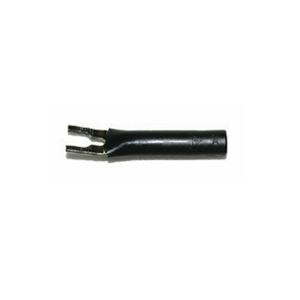
- Small-gauge lugs used for instrumentation wiring, control panels, and terminal block connections rather than power feeders.
- Available insulated or non-insulated, and in a wide range of pin/ring diameters to match terminal block and screw sizes.
Cable Lug Standards, Sizing and Compliance in Saudi Arabia
UL Listed · Conductor Sizing · Crimp Die Matching · Torque Values · SASO Compliance
Cable lug selection on Saudi projects generally needs to satisfy three things at once: the electrical consultant's specification (often referencing UL, BS, or IEC standards for the lug and crimp performance), the cable/conductor size actually being terminated, and any SASO or local utility requirements that apply to the specific installation, particularly for utility-connected feeders and substations. Getting any one of these wrong is a common reason lugs get rejected at inspection or, worse, fail in service.
Matching Lug Size to Conductor
- Undersized lugs won't accept the full strand count of the conductor, forcing strands to be cut or left outside the barrel - both reduce the joint's current-carrying capacity and mechanical strength.
- Oversized lugs leave air gaps inside the barrel after crimping, increasing contact resistance and creating a weak point that heats up under load over time.
- Manufacturer sizing charts should always be checked against the exact conductor cross-section (mm2) and strand count, since lugs from different manufacturers are not always interchangeable for the same nominal size.
Crimping and Torque Requirements
- Die matching: Every lug size and type has a specific crimping die recommended by the manufacturer - using the wrong die is one of the most common causes of joint failure even when the lug itself is correctly sized.
- Crimp cycle count: Larger long-barrel lugs typically require multiple overlapping crimps along the barrel length, not a single crimp, to achieve full mechanical and electrical performance.
- Bolted connections: Two-hole and four-hole pad lugs bolted to busbars must be torqued to the manufacturer's specified value - both under- and over-torquing reduce joint reliability.
UL Listing and Third-Party Certification
UL-listed cable lugs have been independently tested for current rating, temperature rise, and mechanical pull-out strength when used with the specified conductor and crimp die combination. For utility, substation, and larger commercial projects, consultants frequently specify UL-listed (or equivalent third-party certified) lugs as a baseline requirement - always confirm the listing covers the specific lug size, conductor type, and crimping tool/die being used on site, since a UL listing is typically tied to that exact combination rather than the lug in isolation.
How to Choose a Cable Lug Supplier in Saudi Arabia
Stock Availability · Certification · Technical Support · Bulk Pricing
Cable lugs are a high-volume, low-unit-cost item on most projects, which makes it tempting to buy on price alone - but the wrong lug, plating, or crimp-die mismatch can cause callbacks and rework that cost far more than any savings on the unit price. Points worth checking before placing a bulk order:
- Confirm exact conductor size and strand count for every termination point, not just the general cable size, since strand count affects which barrel size actually fits.
- Ask whether the lugs are UL listed or third-party certified if the project specification requires it, and confirm the certificate covers the specific size and crimp die being used.
- Check plating and material compatibility - confirm bi-metallic lugs are supplied wherever aluminium conductor terminates onto copper busbar or vice versa.
- Ask about crimping tool and die compatibility - some suppliers rent or sell hydraulic crimping tools matched to their lug range, which avoids die-mismatch issues on site.
- Request bulk/project pricing for large quantities - most suppliers offer tiered pricing well below single-unit rates for panel boards, substations, or multi-building projects.
Cable Lug Installation & Inspection Best Practices
Strip Length · Crimp Verification · Anti-Oxidant Compound · Periodic Re-Torquing
A correctly specified lug can still fail if it's installed incorrectly. Saudi Arabia's high ambient temperatures make marginal joints more likely to overheat, so installation quality matters more here than in cooler climates.
- Correct strip length: Strip the conductor insulation to match the lug barrel depth exactly - too short leaves strands outside the crimp zone, too long leaves bare conductor exposed beyond the lug.
- Full strand insertion: All strands should be fully seated in the barrel before crimping - visually or by feel-checking that the conductor bottoms out against the barrel stop.
- Anti-oxidant compound on aluminium: Apply the compound to aluminium conductor strands before insertion, and wipe away excess after crimping, to prevent oxide-layer resistance build-up.
- Crimp inspection: Check crimp indent depth and position against the die manufacturer's go/no-go gauge where available, particularly on larger power feeders.
- Periodic re-torquing: Bolted lug connections on busbars and switchgear should be included in periodic electrical maintenance schedules, since thermal cycling can gradually loosen bolted joints over time.
Cable Lug Suppliers - Riyadh, Dammam and Saudi Arabia
Supply · Stock · Technical Support · Bulk & Project Pricing
Riyadh - Verified Suppliers
HARMATEK
✓ Verified Supplier
Location: Prince Mohammed Bin Abdulrahman Bin Abdulaziz Road, Riyadh, KSA
Phone: +966 55 947 1701 | Mobile: +966 54 802 2461
Products: Copper cable lugs, compression lugs, cable lug ranges
Electric Point Trading Establishment
Location: Building No: 7312, Secondary No: 3014, Unit 2, Al Farazdaq Street, Ghurabi, Riyadh, KSA
Phone: +966 50 700 3656
Products: Cable lugs, electrical connectors and terminations
Electrotel
✓ Verified Supplier
Location: Al Adl Al Waidh Street, Al Amal, Riyadh, KSA
Phone: +966 11 4090555
Products: Cable lugs and electrical/telephone equipment
Sana for Electrical and Telephone Company
Location: Olaya Street, Al Olaya, Riyadh, KSA
Phone: +966 11 405 0775 | Mobile: +966 55 072 6964
Products: Cable lugs, electrical and telephone equipment
Dammam - Industrial Supply
Techno Group of Trade and Industries
Location: Hail Street, 2nd Industrial City, Dammam, KSA
Phone: +966 13 812 3400
Products: Cable lugs and industrial electrical trade supplies
Cable Lug Product Ranges Available From KSA Suppliers
Product ranges commonly stocked by cable lug suppliers in the Kingdom include Grade A copper cable lugs, Toolx cable lugs, PARTEX cable lug 10mm2, TAC cable lugs (Z LUN F, 38mm), HOST aluminium compression lugs, UNITED POWER UP long barrel cable lugs, terminal split-bolt connector lugs, HTF crimped-with lugs, CAVALO cable lugs, SOFAMEL cable lugs and connections, bi-metal cable lugs, 185mm pin-type lugs, Nissad copper cable lugs, and CEMBRE 1-hole UL-listed copper cable lugs, spanning sizes from small control-wiring lugs up to heavy 630mm2 long-barrel lugs for main power feeders.
Cable Lug Pricing Guide - Approximate Cost Breakdown
Copper · Aluminium · Bi-Metallic · Mechanical · Bulk Project Pricing
| Lug Type |
Size Range |
Price Range (per unit) |
| Copper Compression Lug (Small) |
10mm2-50mm2 |
SAR 4-25 |
| Copper Long Barrel Lug (Large) |
95mm2-630mm2 |
SAR 60-250 |
| Aluminium Compression Lug |
25mm2-400mm2 |
SAR 15-180 |
| Bi-Metallic Lug |
25mm2-400mm2 |
SAR 25-350 |
| Mechanical / Split-Bolt Connector |
All common sizes |
SAR 3-90 |
| Pin-Type / Ring-Type Lug |
Control wiring |
SAR 2-40 |
| Hydraulic Crimping Tool (Purchase) |
Up to 630mm2 |
SAR 800-6,000 |
Bulk and project quantities are typically priced well below these per-unit figures - always request a project quote for orders above a few hundred units rather than relying on catalogue unit pricing.
Frequently Asked Questions - Cable Lugs in Saudi Arabia
What's the difference between a compression lug and a mechanical lug?
A compression lug is permanently crimped onto the conductor using a hydraulic or hand crimping tool with a matched die, creating a fixed, low-resistance joint. A mechanical lug clamps the conductor using a set screw or split-bolt, which can be reopened and reused but generally carries a lower current rating than an equivalent compression lug of the same conductor size.
Why do I need a bi-metallic lug instead of a standard copper or aluminium lug?
Whenever an aluminium conductor needs to terminate onto a copper busbar or copper conductor (or vice versa), a bi-metallic lug is required to prevent galvanic corrosion at the joint. Crimping aluminium conductor directly into a copper lug, or bolting it directly onto copper, creates a corrosion-prone joint that degrades over time and increases resistance.
How do I know what size cable lug I need?
Match the lug's barrel size to the exact cross-sectional area (mm2) and strand count of the conductor being terminated, using the manufacturer's sizing chart rather than assuming lugs are interchangeable across brands for the same nominal size. Undersized lugs won't accept the full strand count, while oversized lugs leave air gaps that increase joint resistance.
Does the crimping tool and die matter, or can I use any hydraulic crimper?
Yes, it matters significantly. Every lug size and type has a manufacturer-recommended crimp die, and using the wrong die - even on a correctly sized lug - is one of the most common causes of joint failure. Aluminium lugs in particular require different dies and higher crimp pressure than copper lugs of the same nominal size.
What does "UL listed" mean for a cable lug, and do I need it?
A UL listing means the lug has been independently tested for current rating, temperature rise, and pull-out strength when used with a specific conductor type and crimping tool/die combination. Many project specifications, particularly for utility, substation, and larger commercial installations, require UL-listed (or equivalent third-party certified) lugs - always confirm the listing covers your exact lug size, conductor, and crimping tool combination.
Do cable lugs need periodic maintenance after installation?
Bolted lug connections on busbars and switchgear should be included in periodic electrical maintenance schedules, since thermal cycling in Saudi Arabia's high ambient temperatures can gradually loosen bolted joints over time. Crimped compression joints are generally maintenance-free once correctly installed, but should still be included in periodic thermal (infrared) inspection where accessible.
How much do cable lugs cost in Saudi Arabia?
Small copper compression lugs (10mm2-50mm2) typically run SAR 4-25 per unit, large copper long-barrel lugs (95mm2-630mm2) range SAR 60-250, aluminium compression lugs SAR 15-180, and bi-metallic lugs SAR 25-350, depending on size and plating. Mechanical split-bolt connectors and small pin/ring-type lugs are generally the least expensive option at SAR 2-90 per unit. Bulk project quantities are typically priced well below these per-unit catalogue rates.
.webp)

/cable-lug/cable-lugs.webp)










 0
0 

.webp)