A scaffold without braces is just a stack of poles waiting to sway. Scaffolding braces are the diagonal and cross members that lock a scaffold structure into a rigid frame, stopping it from racking sideways under wind load or worker movement.
Ask any scaffold inspector what fails first on a poorly assembled structure and the answer is almost always the same: missing or under-specified bracing. Standards, ledgers, and transoms give a scaffold its shape, but it's the diagonal brace, cross brace, and facade tie that stop the whole frame from leaning or twisting once it's loaded with workers, materials, and wind. In the UAE, where sudden shamal winds can hit a tall scaffold hard, bracing isn't a detail to skip - it's the difference between a stable working platform and a structure that needs to be shut down and re-checked.
|
3+
Brace Types
|
1.5–3.3m
Available Lengths
|
100%
Structural Stability
|
Steel & Aluminium
Common brace materials |
Q: Do I actually need bracing on a small scaffold?
Yes - even a two-lift access tower needs diagonal bracing to stop it racking sideways. The taller, longer, or more heavily loaded a scaffold is, the more bracing it needs, and free-standing towers usually need more bracing per bay than a scaffold tied back into a building facade. If you're not sure how much bracing your structure needs, that's a question for your scaffold design or a competent scaffolder - this page is a sourcing guide, not a structural design tool.
Suppliers across Dubai and Abu Dhabi, all reachable by direct phone - call ahead with your brace type, length, and quantity for the fastest quote.
Phone: +971 4 589 2 555 | Serves: UAE-wide | View Supplier
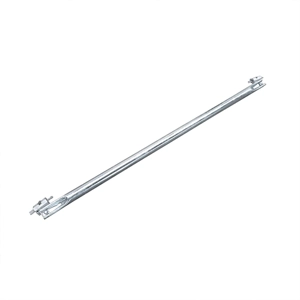
Al Naseeha lists diagonal braces in four lengths - 157, 207, 257, and 307 cm - built to the EN12810-1 standard for scaffold and access equipment. The 207 cm brace weighs between 4.6 and 6.6 kg depending on fitting, giving a sense of the weight range across the series. Having four lengths in one place means you can match the brace to your actual bay spacing rather than settling for a single generic size.
Phone: +971 4 885 5001 | Location: Nad Al Hamar, Dubai, UAE | Serves: UAE-wide | View Supplier
Ascend Access Systems Scaffolding LLC is listed as both a manufacturer and supplier, with a five-product bracing range that goes beyond standard diagonal bracing. The Horizontal Brace is aluminium, Grade 6061 T6 - a lightweight, corrosion-resistant alloy commonly used where weight matters as much as strength. The single and double push-pull props are worth asking about separately if you need adjustable bracing to plumb or align a structure, rather than a fixed-length diagonal or horizontal brace.
Phone: 04 255 2700 | Location: Dubai, UAE | View Supplier
Wellgate Scaffolding Trading Company LLC supplies a full Cuplock system rather than standalone diagonal braces - standards from 1.00 to 3.00 m, ledgers and mediate transoms both from 0.60 to 2.50 m, and cantilever beam frames from 1.0 to 1.50 m. If your site runs Cuplock rather than Ringlock or Kwikstage, the ledger is the component doing the horizontal bracing job, and it's worth ordering alongside matching standards and transoms from the same supplier so everything fits together correctly.
Phone: 02 551 3511 | Location: Abu Dhabi, UAE | View Supplier
Ace Aluminium Scaffolding publishes one of the most detailed brace specification sheets on this page - five horizontal lengths and five diagonal lengths, each with an exact article number and weight. Their braces are colour-coded (green for horizontal, red for diagonal) so crew can identify the right piece at a glance during erection, are welded rather than crimped at the joint for a more secure connection, and use heavy-duty claws with a fast-release clip mechanism for quicker fitting and removal.
Phone: 04 243 2440 | Location: Dubai, UAE | View Supplier
Duscaff Scaffolding Industries LLC is the only supplier on this page publishing bracing across three distinct scaffold systems - Ringlock, Frame (Snap-On/Wedgelock), and Kwikstage - rather than one bracing style. That matters if your site runs more than one scaffold system, or if you're not sure yet which system your project will standardize on. Their frame cross braces are galvanized steel with reinforced ends and Quickfit compatibility, while their Kwikstage and Ringlock diagonals both use swivel wedge fittings for quick, secure locking.
| Supplier | Products | Phone | Best For |
|---|---|---|---|
| Al Naseeha Building Materials Trading Co LLC | Diagonal braces - 157, 207, 257, 307 cm (EN12810-1) | +971 4 589 2 555 | Matching a brace length precisely to your bay spacing |
| Ascend Access Systems Scaffolding LLC | Diagonal brace, aluminium horizontal brace, single & double push-pull props, duty props | +971 4 885 5001 | A wider bracing & propping range, including adjustable props |
| Wellgate Scaffolding Trading Company LLC | Cuplock ledgers, standards, transoms, cantilever beam frames | 04 255 2700 | Sites running the Cuplock system |
| Ace Aluminium Scaffolding | Horizontal braces (HB150–HB300), diagonal braces (DB172–DB332), colour-coded | 02 551 3511 | Abu Dhabi sourcing with a full, exact-weight spec sheet across 10 lengths |
| Duscaff Scaffolding Industries LLC | Ringlock diagonal, Kwikstage diagonal, cross braces (Snap-On/Wedgelock compatible) | 04 243 2440 | Sites running Ringlock, Frame, or Kwikstage systems |
Q: What's the actual difference between a diagonal brace and a cross brace?
A diagonal brace runs at an angle across one bay of the scaffold, tying a standard at one level to a standard at another level. A cross brace uses two diagonal members crossing in an X-shape across a single bay, giving rigidity in both directions at once. Which one you need - or whether you need both - depends on the scaffold design, not personal preference, so this is worth checking with a competent scaffolder before you order.
Picture a bookshelf that wobbles until you screw a diagonal strip of wood across the back - that's exactly what a diagonal brace does for a scaffold bay. It runs at an angle between standards on different lifts, stopping the frame from leaning or "racking" sideways under load or wind.
A cross brace is two diagonal members crossed in an X across the same bay, so the frame resists movement whichever way it's pushed. This is common on mobile towers and independent scaffolds that don't have a building wall to lean on for support.
On tall scaffolds running up the side of a building, a facade brace (or tie) connects the scaffold structure back to the building itself at regular intervals. This is what stops a tall UAE facade scaffold from swaying away from the wall in strong wind, and it's typically spaced and specified as part of the overall scaffold design rather than added as an afterthought.
While diagonal and cross braces usually work between lifts (vertically), a ledger brace runs horizontally along the length of the scaffold to stop the whole run from swaying end to end - particularly important on longer facade scaffolds spanning multiple bays.
Unlike a fixed-length diagonal or horizontal brace, a push-pull prop extends and retracts, letting you fine-tune the angle or alignment of a structure while it's being erected - then lock it in place. Single-tube versions handle lighter bracing jobs; double-tube versions take on heavier loads and offer more rigidity once locked. They're common on facade access systems where a scaffold needs to be plumbed precisely against an uneven building line.
A horizontal brace sits flat, running level between two standards, rather than at an angle like a diagonal brace. Think of it as the ledger's stiffer cousin - it stops a long run of scaffold from swaying end to end and helps keep each bay square before diagonals go on. Ascend Access Systems Scaffolding LLC lists an aluminium horizontal brace (Grade 6061 T6) for exactly this job, and Ace Aluminium Scaffolding in Abu Dhabi colour-codes its horizontal braces green so crews can pick the right piece at a glance during erection.
Q: What's a vertical scaffolding brace, and is it different from a standard?
A vertical brace runs up and down alongside the main standards (uprights), adding extra reinforcement so the frame resists buckling under heavy vertical load - different from a standard itself, which carries the primary load down to the base. Vertical bracing shows up most on tall, heavy-duty structures like industrial shutdown scaffolds and high-rise access towers, where the extra stiffness against buckling matters more than on a short general-access scaffold.
Q: What does "adjustable brace" actually mean?
An adjustable brace telescopes or slides to a range of lengths instead of being fixed at one size - useful when a site has irregular bay spacing or when a rental fleet needs fewer distinct SKUs in stock. The trade-off is a small added weight and cost over a fixed-length brace of the same size, in exchange for flexibility across multiple bay widths.
A quick specification reference across the common brace types - use it to narrow down what to ask your supplier for before you call.
| Brace Type | Orientation | Typical Material | Typical Length Range | Common Standard |
|---|---|---|---|---|
| Diagonal Brace | Angled, between lifts | Galvanized steel | ~150–310 cm | EN12810-1 |
| Horizontal Brace | Level, along the run | Aluminium or galvanized steel | Matches bay width | EN12810-1 |
| Vertical Brace | Up-and-down, alongside standards | Galvanized steel | Matches lift height | EN12810-1 |
| Cross Brace | X-shape across one bay | Galvanized steel | ~150–310 cm per member | EN12810-1 |
| Adjustable / Push-Pull Brace | Diagonal, telescoping | Galvanized steel | Telescopes across a length range | EN12810-1 |
| Facade Brace / Tie | Scaffold-to-building anchor | Galvanized steel | Set by tie spacing design | EN12810-1 |
This table is a general specification reference, not a quote or a guaranteed match to any single supplier's exact stock - always confirm exact dimensions and standards with the supplier before ordering.
Q: What material and diameter should a scaffold brace be?
Most scaffolding braces sold in the UAE are galvanized steel tube at the industry-standard 48.3 mm outer diameter, matching the standards and ledgers they connect to. Galvanizing protects the steel from corrosion - a real consideration in the UAE's coastal humidity and summer heat. Braces are fitted using swivel couplers (which can rotate to any angle) or fixed couplers (which hold a set 90-degree angle), and the choice between the two comes down to the geometry of the scaffold bay you're bracing.
The figures below are a general market guide only, not a quote from any supplier listed on this page. Brace pricing depends on length, material, coupler fitting, and order volume, and it moves with steel prices over time - always confirm a firm quote directly with the supplier.
| Brace Type | Typical AED Range (per piece) | What Moves the Price |
|---|---|---|
| Diagonal / cross brace (galvanized steel) | AED 35 – 70 | Length, tube thickness, and coupler type (fixed vs swivel) |
| Horizontal brace (aluminium) | AED 40 – 80 | Aluminium typically costs more per piece than galvanized steel of the same length |
| Vertical brace | AED 35 – 70 | Similar range to diagonal braces of matching length |
| Adjustable / push-pull brace or prop | AED 60 – 150 | Telescoping mechanism and locking hardware add cost over a fixed-length brace; single vs double-tube design also matters |
Note: these ranges are indicative market pricing for guidance only and are not quotes from any of the five suppliers listed on this page. Always request a current quote before budgeting or ordering.
Q: What actually goes wrong with scaffolding braces on site?
Most brace problems fall into a handful of repeat offenders - and most are easy to catch with a quick visual check before a brace goes back into use.
Problem: Repeated handling, dropping, or stacking bends the tube slightly, which stops the coupler seating flush and weakens the brace at the bend point.
Fix: Don't attempt to straighten a structurally bent brace - retire it and replace it. A brace is a safety component, not something to hammer back into shape and reuse.
Problem: The UAE's coastal humidity and summer heat accelerate corrosion on galvanized steel braces, especially once the zinc coating is scratched or chipped.
Fix: Inspect the galvanized coating regularly and store braces off damp ground. Light surface rust can sometimes be treated, but pitting or flaking corrosion means the brace should be retired.
Problem: Swivel couplers can seize with rust or debris, and repeated tightening wears down the threads on fixed couplers, making the brace hard to fit securely.
Fix: Clean and lightly lubricate swivel couplers between uses, and check thread condition before every job - a coupler that won't tighten properly can't hold the brace where it needs to be.
Problem: A brace that's slightly too short or too long won't seat at the correct angle, leaving the connection under strain or loosely fitted.
Fix: Measure the actual bay dimensions before ordering, and consider an adjustable brace on sites with irregular spacing instead of forcing a fixed-length brace to fit.
Problem: Braces go missing between hires or get skipped during a rushed reassembly, leaving a scaffold under-braced without anyone noticing until it sways.
Fix: Keep spare braces in stock, check bracing against the scaffold design during every erection sign-off, and treat a missing brace as a stop-work issue rather than something to add "later."
It's a metal tube fixed diagonally (or crossed) across a scaffold bay to stop the whole structure from swaying or leaning sideways once it's loaded with workers, materials, and wind.
No. Even short, temporary towers need enough bracing to stay rigid - the amount of bracing scales with height and load, but some bracing is needed on almost every free-standing structure. Confirm the exact bracing requirement for your scaffold design with a competent scaffolder.
No. A diagonal brace works within the scaffold frame itself, between standards on different lifts. A facade tie connects the scaffold back to the building it's running alongside, which is a different job - anchoring the whole structure rather than stiffening one bay.
A vertical brace is a fixed-length member fitted alongside a scaffold's uprights to resist buckling under vertical load. An adjustable brace telescopes to different lengths and is usually fitted diagonally, letting one brace fit a range of bay widths instead of needing a fixed size for each.
Call the suppliers above directly with your required brace length, tube diameter, coupler type, and quantity. Pricing depends on all four of those details plus current steel costs, so it's not something a generic list price can reflect accurately.
Compare verified UAE suppliers above and contact them directly for product availability, specifications, pricing and delivery schedules. Looking for more access equipment? Browse our complete range of Ladders & Scaffolding Accessories, including scaffold boards, couplers, base jacks, braces, adapters, mobile scaffold towers, and other construction access products from verified UAE suppliers.

 0
0