... Read more...
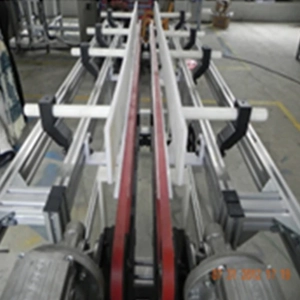
Finding the right conveyor system for your UAE facility requires understanding how different conveyor configurations impact operational efficiency, maintenance costs, and long-term productivity. Whether you're managing a warehouse in Dubai, operating a manufacturing plant in Sharjah, or running a logistics center in Abu Dhabi, selecting the appropriate material handling conveyor system directly affects your bottom line.
A conveyor system represents a mechanical material handling solution that transports products, materials, and goods from one location to another within your facility. In the UAE's diverse industrial landscape—spanning automotive manufacturing, food processing plants, pharmaceutical production, e-commerce fulfillment centers, and construction material distribution—conveyor systems eliminate manual handling bottlenecks while increasing throughput by up to 300% compared to manual operations.
UAE businesses across Dubai Industrial City, Jebel Ali Free Zone, and Sharjah Industrial Areas rely on conveyor automation to meet the region's demanding production standards. Modern conveyor belt systems handle loads ranging from lightweight packaging materials (as little as 100 grams) to heavy palletized goods exceeding 2,000 kilograms, with conveying speeds adjustable from 5 feet per minute (FPM) for delicate items to 150 FPM for high-volume operations.
Belt Conveyor Systems
Belt conveyors remain the most versatile material handling equipment for UAE industries. These systems utilize continuous belts constructed from PVC, rubber, polyurethane, or specialized food-grade materials stretched between two or more pulleys. Load capacities reach up to 8,000 tons per hour (TPH) for bulk material applications, with belt widths ranging from 18 inches to 72 inches. Incline capabilities extend from horizontal configurations to 30-degree angles, making them ideal for multi-level warehouse operations and production line integration.
For UAE food processing facilities requiring hygiene compliance, food-grade belt conveyors with washdown capabilities meet international safety standards while maintaining operational speeds of 30-90 FPM. Heat-resistant variants withstand temperatures up to 200°C, essential for UAE's high-temperature manufacturing environments.
Roller Conveyor Systems
Roller conveyors excel in UAE distribution centers and e-commerce fulfillment operations where package handling efficiency determines profitability. Available in gravity-fed and motorized configurations, roller systems feature rollers ranging from 1.9 inches to 5 inches in diameter, with effective widths from 3 inches to 120 inches. Chain-driven live roller (CDLR) conveyors transport medium to heavy loads—including pallets, drums, and industrial totes—at controlled speeds with load capacities exceeding 750 kg per section.
Gravity roller conveyors provide cost-effective solutions for UAE warehouses with declining floor layouts, requiring no power consumption while achieving material flow rates of 15-30 items per minute. Motorized roller systems offer variable speed control from 10-100 FPM, with reversible operation for bi-directional material flow.
Modular Conveyor Systems
Modular conveyor belt systems address the UAE market's need for flexible, reconfigurable material handling solutions. Constructed from interlocking plastic modules, these systems adapt to changing production layouts within hours rather than days. Radius configurations enable curved conveyance with turning radii from 300mm to 1,200mm, while Z-type inclined conveyors provide vertical elevation up to 8 meters within compact footprints—critical for space-constrained UAE facilities where real estate costs demand maximum space utilization.
Screw and Chain Conveyor Systems
For UAE industries handling bulk materials, powders, or wet products, screw conveyors (also called auger conveyors) move materials through enclosed troughs using rotating helical screws. Horizontal screw conveyors transport materials up to 3 meters with capacities reaching 100 cubic meters per hour, while inclined configurations handle angles up to 45 degrees with reduced efficiency factors.
Chain conveyors utilize endless chain mechanisms for heavy-duty applications, transporting loads up to 10 feet in size through manufacturing facilities, paint shops, and high-temperature environments exceeding 300°C—common in UAE metal processing and automotive industries.
Material Characteristics and Load Requirements
Before purchasing industrial conveyor equipment in UAE, define your material properties: product dimensions, weight per unit, fragility levels, and temperature sensitivity. A food processing plant in Dubai handling packaged goods requires different specifications than a construction material supplier in Ajman moving aggregate materials. Weight capacity specifications must account for both individual item loads and cumulative belt loading measured in kg per linear meter.
Production Rate and Throughput Demands
Calculate your required material flow rate in units per hour or tons per hour. UAE manufacturing facilities typically specify conveyor speeds to match production line rates—a bottling plant may require 120 units per minute of conveyance, while a pallet handling system operates at 6-12 pallets per hour. Under sizing conveyor capacity creates production bottlenecks; oversizing wastes capital and operational energy costs.
Environmental Operating Conditions
UAE's climate presents unique challenges: ambient temperatures exceeding 50°C in summer, dust infiltration, and humidity variations near coastal facilities. Specify conveyor systems with appropriate ingress protection (IP) ratings—IP65 or higher for dusty environments—and materials resistant to thermal expansion. Outdoor conveyor installations require UV-resistant belting and corrosion-protected frames, typically hot-dip galvanized or stainless-steel construction.
Space Constraints and Layout Integration
Measure available floor space, ceiling heights, and integration points with existing equipment. Inclined and spiral conveyor configurations maximize vertical space utilization in multi-story warehouses common in Dubai and Sharjah. Consider maintenance access requirements—minimum 600mm clearance around motorized components and 400mm for belt tension adjustments.
The UAE market features established conveyor system suppliers offering design, manufacturing, installation, and maintenance services. Spintek Middle East FZE in Sharjah specializes in customized conveyor solutions for specific applications, including induction heating conveyors with precise rotational control for industrial processes. Major suppliers across Dubai, Abu Dhabi, and Sharjah provide local engineering support, reducing lead times to 2-6 weeks versus 8-12 weeks for imported systems.
When evaluating conveyor equipment suppliers in UAE, prioritize companies offering complete turnkey solutions from concept to commissioning, 24/7 local spare parts availability, preventive maintenance programs, and experience in your specific industry sector. Request detailed specifications including motor power ratings (typically 0.5-7.5 kW for standard applications), control system compatibility (PLC integration, variable frequency drives), and energy consumption data.
Industrial conveyor system prices in UAE vary based on configuration complexity, materials, and automation level. Basic gravity roller conveyors start around AED 3,000-8,000 for 3-meter sections, while motorized belt conveyor systems range from AED 15,000-150,000 depending on length, load capacity, and control sophistication. Custom-engineered solutions for pharmaceutical or food-grade applications command premium pricing but deliver superior hygiene compliance and longevity.
Calculate total cost of ownership including installation (typically 15-20% of equipment cost), annual maintenance (3-5% of initial investment), energy consumption (roller conveyors consume 60-80% less power than belt systems), and expected service life (10-15 years for quality systems with proper maintenance). UAE businesses typically achieve ROI within 18-36 months through labor cost reduction and productivity improvements.
Conveyor system reliability in UAE's challenging environment demands proactive maintenance. Implement quarterly inspections covering belt tension, roller bearing condition, chain wear, and alignment verification. Lubrication schedules vary by component type—roller bearings require re-lubrication every 2,000-4,000 operating hours, while chain drives need monthly application of high-temperature lubricants.
Stock critical spare parts locally: replacement belts, drive motors, bearings, and sensors. Downtime costs in high-volume UAE operations can exceed AED 10,000 per hour, making spare parts investment essential. Partner with suppliers offering emergency support response times under 4 hours within major Emirates.
Request detailed quotations from at least three UAE-based conveyor system manufacturers including: complete technical specifications, 3D layout drawings, power requirements, control panel configurations, installation timelines, warranty terms (minimum 12 months standard), and maintenance program options. Verify supplier credentials through facility visits and reference checks with existing customers in similar industries.
For complex material handling projects, engage suppliers offering factory acceptance testing (FAT) before shipment and site acceptance testing (SAT) post-installation. This ensures your conveyor system meets specified performance parameters before full production deployment.
1. What types of conveyor systems are best for Dubai and Abu Dhabi's logistics sector?
For the high-demand logistics and warehousing in Dubai, Abu Dhabi, and across the UAE, roller conveyors, belt conveyors, and automated sortation systems are ideal. They ensure fast, efficient material handling and package sorting to meet the region's rapid delivery standards.
2. How can a conveyor system reduce operational costs in my UAE facility?
By automating material handling, you significantly cut labor costs, minimize errors, and increase throughput. This leads to a strong ROI through enhanced supply chain efficiency and lower long-term operational expenses in your Dubai warehouse or Abu Dhabi factory.
3. Are conveyor systems suitable for the harsh climate in the Middle East?
Yes, but you must specify industrial-grade and corrosion-resistant conveyors. Leading conveyor suppliers in the UAE offer systems with protective coatings and heat-tolerant components designed for the Gulf region's dust, heat, and humidity.
4. What should I look for in a conveyor system supplier in the UAE?
Choose a conveyor company in Dubai or Sharjah with a strong portfolio, local service support, and expertise in turnkey conveyor solutions. Look for suppliers of top brands like Interroll, Hytrol, or FlexLink who understand local regulations.
5. Can you install a conveyor system in an existing warehouse in Ajman or RAK?
Absolutely. A professional conveyor system installer will conduct a site survey to design a customized conveyor solution that integrates seamlessly with your existing warehouse layout and storage systems in Ras Al Khaimah, Ajman, or any emirate.
6. What maintenance do conveyor systems require in the UAE?
Routine maintenance includes cleaning debris (crucial for desert environments), checking belts and rollers, and lubricating bearings. Partnering with a local conveyor maintenance provider for scheduled service ensures maximum uptime and system longevity.
7. Are there modular conveyor options for flexible operations?
Yes. Modular belt conveyors and portable conveyor systems offer great flexibility. They are perfect for UAE manufacturing plants and distribution centers that need to easily reconfigure layouts for different products or peak seasons.
8. How do conveyor systems integrate with Warehouse Management Systems (WMS)?
Modern conveyors with PLC controls and sensors integrate directly with your WMS or ERP system. This enables real-time tracking, automated sorting, and data-driven inventory management, creating a smart automated material handling system.
9. What industries in the UAE benefit most from conveyor automation?
Beyond logistics, key sectors include food & beverage processing, e-commerce fulfillment, airport baggage handling, retail distribution, and construction material handling. Any industry needing efficient, continuous movement of goods benefits.
10. How do I calculate the ROI for a conveyor system investment?
Consider: increased throughput (more shipments/day), labor savings, error reduction, and space optimization. A reputable conveyor system supplier in the UAE will provide a detailed ROI analysis based on your specific operational efficiency metrics.
Contact verified conveyor system suppliers in Dubai, Sharjah, and Abu Dhabi for customized quotations and technical consultations. Local expertise, rapid deployment, and comprehensive support ensure your investment delivers maximum operational efficiency and long-term value.

 0
0