Certified Hot Tapping and Line Stop Services Across Saudi Arabia - Jubail, Dammam, Khobar, Riyadh and Beyond
Hot Tapping - Live Pipeline Connections for Oil and Gas, Petrochemical, Water and HVAC Systems in Saudi Arabia
API 2201 Compliant · In-Service Welding · No Shutdown Required · Onshore & Offshore · 24/7 Mobilization
Shutting down a live pipeline to add a branch connection, install an instrument, or isolate a section for repair can cost a facility millions of riyals in lost production. Hot tapping solves this by welding a branch fitting onto a pressurized, in-service pipe and cutting through the wall with a specialized machine, all while the line stays live. No drain-down, no purge, no interruption to downstream customers. Certified hot tapping and line stop contractors serving Jubail, Dammam, Khobar, Riyadh and Jeddah plan, engineer and execute these interventions under strict welding and pressure-control procedures.
Hot tapping is used across refineries, petrochemical plants, gas and water distribution networks, and commercial HVAC and chilled-water systems. Typical applications include new pipeline tie-ins, instrument and thermowell installation, emergency isolation ahead of a repair, and preparing a line for a line-stop plug so a downstream section can be drained or replaced without shutting down the whole system. Every job is engineered around pipe material, wall thickness, pressure, temperature and product, so no two hot taps are executed the same way.
New Pipeline Tie-In Required | Instrument or Thermowell Installation | Emergency Isolation Before Repair | Branch Connection on a Live System
Hot Tapping - Branch Connections and Pipeline Tie-Ins on Pressurized Lines
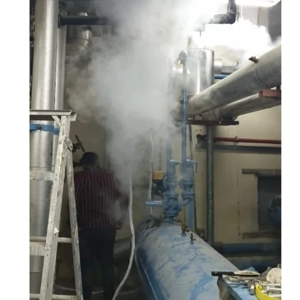
A weldolet, reinforced tee or split tee is welded onto the live pipe using a qualified in-service welding procedure per API 1104 Appendix B, a full-bore valve is bolted to the fitting, and a hot tap machine cuts through the pipe wall under pressure. The cut coupon is retracted inside the machine and the valve is closed before the tapping equipment is removed, so the pipeline never loses containment. This method is used for new branch lines, sampling points, drain connections and tie-ins to expand or reconfigure a piping network without a shutdown.
Line Stopping - Isolating a Section of Pipeline Without Draining the System
- Hot tap and fold-and-plug or inflatable stopple isolation - Seals a section of live pipe so downstream work can proceed dry
- Bypass installation - Maintains flow to customers while the isolated section is repaired or replaced
- Valve or fitting replacement under isolation - Removes a faulty valve without depressurizing the whole line
- Pipeline tie-in for network expansion - Connects a new lateral to an operating distribution main
- Emergency isolation ahead of a leak repair - Stops flow to a damaged section while the rest of the system stays in service
Pipe Freezing - Isolation Without Welding for Small-Bore, Sensitive or Temperature-Limited Lines
- Forms a solid ice plug inside the pipe using liquid nitrogen or CO2, isolating a section without draining or hot work
- Used where welding is restricted - flammable atmospheres, lined or clad pipe, or lines below minimum hot tap wall thickness
- Common on HVAC chilled water, fire water, process water and smaller utility lines during valve or fitting replacement
- Typically applied on lines up to roughly 12-16 inches; larger diameters usually revert to hot tap and line stop
- Instrument and thermowell installation - Hot tapping a small branch to fit flow meters, sampling probes or temperature sensors on a live line
Hot Tapping Process - Engineering Review, In-Service Welding and Live Cutting
Engineering Assessment · Qualified WPS · Ultrasonic Thickness Testing · Controlled Live Cut · Full Documentation
Hot tapping is treated as a formal, permitted operation rather than routine maintenance. A written, job-specific procedure is prepared and signed off before any welding begins, covering pipe specification, remaining wall thickness after the cut, operating pressure and temperature, product compatibility, and flow velocity through the section being tapped. This planning is what makes it possible to weld directly onto a pipe that is carrying hydrocarbons, gas, steam or water without a loss of containment.
Standard Hot Tapping Procedure
- Engineering assessment: Confirm pipe material, wall thickness, pressure, temperature and product suitability for in-service welding.
- Ultrasonic thickness testing: Verify remaining wall thickness at the weld location and check for laminations or corrosion.
- Weld the branch fitting: Attach a weldolet, reinforced tee or split tee using a qualified welding procedure and low-hydrogen electrodes.
- Non-destructive examination: Magnetic particle or dye penetrant testing on the completed weld before proceeding.
- Install and pressure test the valve: Bolt a full-bore gate or ball valve onto the fitting and test the assembly.
- Mount the hot tap machine and cut: Advance the cutter through the open valve and the full pipe wall under pressure, capturing the coupon on the pilot bit.
- Retract, close and complete the tie-in: Withdraw the cutter, close the valve, remove the machine and connect the new branch piping.
Key Engineering and Safety Parameters
- Minimum wall thickness: Must exceed roughly 5-6 mm remaining after the cut, verified by ultrasonic testing before welding starts.
- Flow velocity: Maintained within a defined range during welding so the flowing product carries heat away and prevents burn-through.
- Operating pressure during the tap: Often reduced to a percentage of the maximum allowable operating pressure as an added safety margin.
- Welder qualification: In-service welding is performed only by welders qualified to API 1104 Appendix B procedures.
- Temperature limits: Hot tapping is generally avoided on lines above roughly 350-370 degrees C or below about -20 degrees C, where metallurgical risk increases.
- Product restrictions: Not performed on pure oxygen lines, highly reactive chemicals, or piping that is clad or internally lined.
Hot Tapping Capabilities, Branch Size Limits and Applicable Industry Standards
Carbon Steel · Stainless Steel · Ductile Iron · HDPE and GRP · 1 Inch to 48 Inch and Above
Typical Branch Size Relative to Header Pipe Size
| Header Pipe Size |
Typical Max Branch Size |
Notes |
| NPS 4 |
NPS 2 |
Limited by fitting availability |
| NPS 6-8 |
NPS 4 |
Standard practice |
| NPS 10-16 |
NPS 8 |
Common for pipeline tie-ins |
| NPS 20-36 |
NPS 12-16 |
Large-diameter tapping machines required |
| NPS 42-56 |
NPS 20-24 |
Specialized equipment, custom engineering |
Codes and Standards Governing Hot Tapping and Line Stop Work
| Standard |
Scope |
| API RP 2201 |
Safe procedures for welding or hot tapping on equipment in service |
| API 1104 (Appendix B) |
Qualification of welders and procedures for in-service pipeline welding |
| ASME B31.3 |
Process piping design in refineries and petrochemical plants |
| ASME B31.4 / B31.8 |
Liquid and gas transmission and distribution pipeline systems |
| ASME PCC-2 |
Repair of pressure equipment and piping, including hot tap guidance |
What Determines Hot Tapping Project Cost in Saudi Arabia
Project-Specific Quotation · Engineering Review Included · No Fixed Price List
Unlike routine AC or plumbing service calls, hot tapping is priced per project after an engineering review, not from a fixed rate card. A small single hot tap on a low-pressure water line and a large-diameter tap on a high-pressure hydrocarbon line at height involve very different equipment, crew size and documentation, so contractors issue a firm quote only once the scope is defined. The following factors drive the price up or down:
- Pipe diameter and branch size: Larger taps need bigger machines, heavier fittings and longer welding time.
- Pressure class and pipe material: Higher ASME pressure classes and alloy or stainless steel require heavier fittings and more welding passes.
- Engineering and NDT scope: Wall thickness surveys, welding procedure qualification and post-weld inspection add time before cutting begins.
- Site access and location: Elevated, confined-space or offshore locations increase rigging, scaffolding and standby crew requirements.
- Mobilization distance: Jubail, Khobar and Dammam-based crews typically mobilize faster and cheaper to the Eastern Province than to Riyadh or Jeddah.
- Permitting and shutdown coordination: Hot work permits, gas testing and standby fire watch are typically included but add coordination time on live process units.
- Fitting supply: Custom-fabricated weldolets, split tees or reinforcement pads for non-standard sizes cost more than stock fittings.
Because of this variability, request a site survey and written quotation before budgeting a hot tap or line stop project rather than relying on a per-inch or per-job estimate.
Hot Tapping and Line Stop Contractors in Saudi Arabia - Jubail, Khobar and Dammam
API 2201 Compliant · Approved by Major Operators · Eastern Province Coverage
Jubail - Hot Tapping and Specialized Mechanical Services
Cooperheat
Location: Second Industrial Support Area, Al Jubail 35724, Saudi Arabia
Phone: +966 13 341 0102
Services: Hot tapping, line stop, online leak sealing, flange weld testing, bolting, safety valve testing
Specialization: API 2201 compliant hot tap and line stop, engineering design and supply of hot tap fittings, API 1104 qualified in-service welding, refinery, chemical and power plant experience
Pricing: Project-based quotation following site survey and engineering review
Al Khobar - Hot Tapping and Industrial Piping Services
SOGEC
Location: 13th Floor, AlHugayet Tower, King Fahd Road, Al Khobar 34433, Saudi Arabia
Phone: +966 13 892 3777
Services: Industrial piping and specialized mechanical contracting for oil, gas and petrochemical facilities
Pricing: Custom quote based on scope and site conditions
Dammam - Hot Tapping for Commercial, Industrial and Utility Piping
White Arch Company (Verified Supplier)
Location: Office 12, 4th Floor, Building No. 6819, Omar Bin Abdul Aziz Street, Secondary No. 4705, Al Muhammaddiya District, Dammam, KSA
Phone: +966 57 048 3020
Services: Hot tapping for commercial, industrial and utility piping systems - new connections, branches and outlets on pressurized lines
Specialization: HVAC, chilled water, water supply, oil and gas piping; live tapping without production shutdown or system drain-down
Pricing: Project-based quotation, customized pipeline modification solutions
Other Specialized Providers in the Region
- PetroSan Oilfield Engineering Co. - Fabricator and supplier of line stop and hot tap fittings built to ASTM B31.1, B31.3, B31.4 and B31.8.
- AGES (Ahmed Ghanim Engineering Services) - Hot tapping, pipe freezing, thermowell installation and line stopping across Saudi Arabia, Bahrain, Qatar and Oman.
- America Trade / ENR - Hot tap and line stop equipment and crew operations based in Jubail, supporting custom engineering solutions for the Gulf oil and gas industry.
Safety Compliance and Why Hot Tapping Requires a Certified Contractor
Formal Risk Assessment · Hot Work Permit · Qualified Welders · Documented Procedure
- Not a routine task: API RP 2201 treats hot tapping as a last-resort intervention requiring a documented risk assessment and sign-off before work begins.
- Burn-through risk: Welding on a live, pressurized pipe wall that is too thin can rupture the pipe. Ultrasonic thickness verification is mandatory before any weld.
- Qualified welders only: In-service welding demands welders and procedures qualified specifically for hot work on live equipment, not standard shop welding qualifications.
- Hydrogen cracking prevention: Low-hydrogen electrodes and controlled preheat, matched to the pipe's carbon equivalent, prevent weld cracking under load.
- Operator approval: Reputable contractors are pre-approved by major oil and gas operators and maintain full documentation for audit and handover.
- Cost avoidance: A single day of unplanned shutdown on a process unit can cost far more than the hot tap itself, making certified live-tapping the lower-risk option when executed correctly.

 0