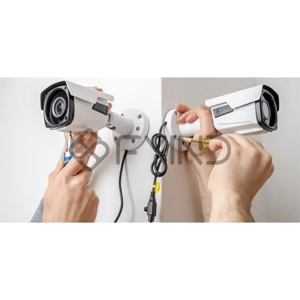
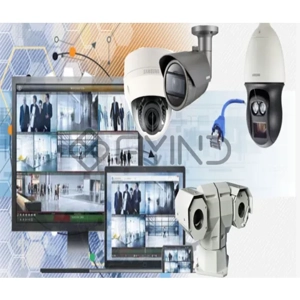














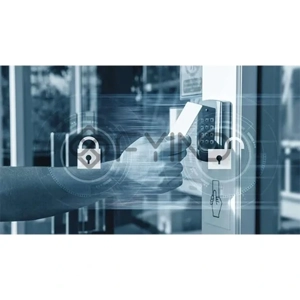
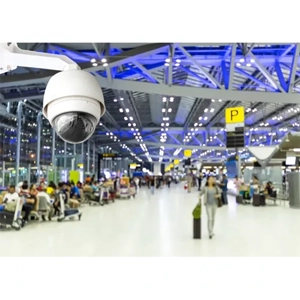

Access control system services in KSA cover the full lifecycle of the electronic systems used to manage entry to doors, buildings and restricted areas - from initial supply and installation through to configuration, integration with other security systems, and long-term maintenance. As Saudi Arabia's commercial, residential and industrial sectors continue to expand, demand for reliable access control system services has grown alongside it, with property owners, facility managers and government entities all looking for a trusted access control system service provider in KSA to secure their premises.
This page brings together everything a buyer needs to evaluate an access control system service in Saudi Arabia: the core services offered, the different types of access control systems in use, where they're applied, and a detailed directory of access control system service providers and related security system suppliers currently active in the Saudi market - including their contact details and exact scope of work.
An access control system service provider in Saudi Arabia typically works across three connected stages: installation, integration, and maintenance. A strong access control system service doesn't stop once the hardware is mounted - it covers the system's entire working life, from the first site visit to years of ongoing support.
Access control system installation is the foundation of every secure facility, and it's usually the first service a buyer searches for. A complete access control system installation service in KSA covers:
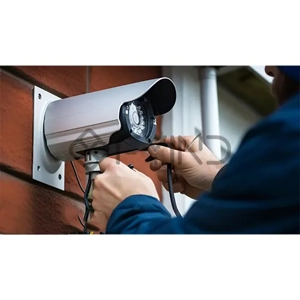
A professional access control system installation service begins with a site survey to identify each door, gate or turnstile that needs to be controlled, followed by selecting the right combination of reader, controller and lock for that specific access point, and finishing with full testing before handover. This matters most on larger jobs - a new office tower nearing handover, for example, needs its main entrances, server rooms and executive suites secured before tenants move in, and surveying the whole building up front lets doors be grouped by security level and installed floor by floor, so everything is commissioned and tested together rather than fixed piecemeal after tenants have already moved in. Poorly installed access control systems are one of the most common causes of failed audits and security gaps, which is why testing and commissioning is treated as a distinct, non-negotiable step by established access control system installation companies in KSA.
Very few access control systems in Saudi Arabia operate as a standalone product today. Most access control system service providers now offer access control system integration with:
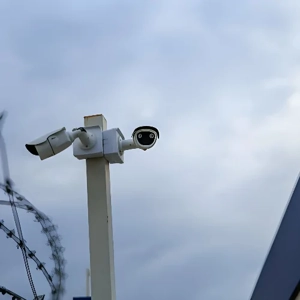
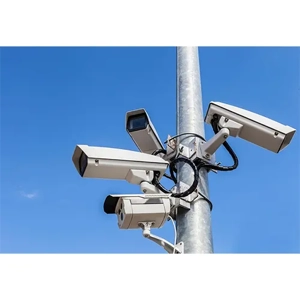
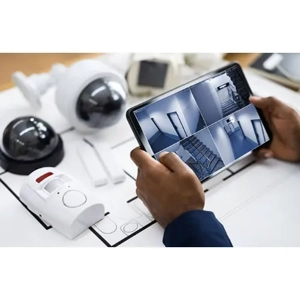
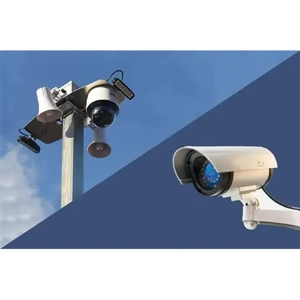
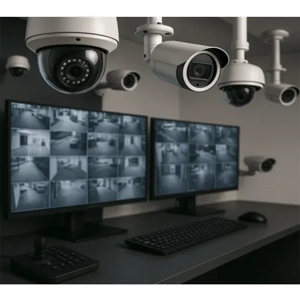
Access control and CCTV integration is particularly common, since it allows every access event - a successful entry, a denied attempt, a forced door alarm - to automatically trigger a camera recording or a live alert, so a warehouse manager who gets a forced-door alert outside working hours receives a linked clip of the exact door at the exact moment instead of having to scroll through hours of unrelated footage to work out what happened. Access control and intercom integration is equally popular in residential compounds and office buildings, letting a resident or receptionist verify a visitor's identity and unlock the door remotely from a single interface. This kind of integrated security system gives facility managers a single source of truth instead of several disconnected logs.
An access control system is only as reliable as its maintenance schedule. Access control system maintenance services in KSA typically include:
Regular access control maintenance reduces the risk of lockouts, false rejections and - more importantly - undetected failures that leave a door unsecured: a compound gate reader that starts intermittently rejecting valid resident cards, for instance, is exactly the kind of fault a routine preventive visit catches and fixes before it turns into residents being locked out altogether. Many access control system service providers in Saudi Arabia offer maintenance as part of an annual service contract alongside the original installation.
Buyers in Saudi Arabia can choose from several access control technologies, and most facilities end up combining more than one method depending on the sensitivity of each access point.
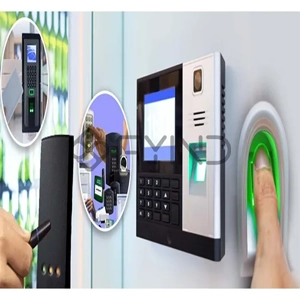
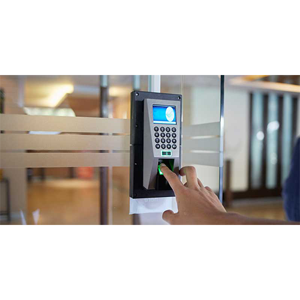
Biometric access control systems authenticate a person using a unique physical trait rather than something they carry or remember. The two most widely deployed biometric access control methods are:
Because biometric credentials can't be lost, lent out or duplicated the way a card or PIN can, biometric access control is increasingly the default choice for offices, industrial sites and residential compounds across Saudi Arabia that need a verifiable, individual record of who accessed a door and when - it's the difference between an attendance log a company can actually rely on for payroll and one where staff can simply clock each other in with a borrowed card. This capability is already active in the local market: providers such as Advanced Technology (Ajax) explicitly support biometric access control with facial recognition and fingerprint authentication, and Enmasco Security Trading Company builds its access platform around facial-recognition-based intelligent image analysis.
RFID access control systems use a proximity card, key fob or badge that's read automatically at the door. Core components of an RFID access control system include:
An RFID access control system remains one of the most cost-effective ways to manage access for large staff counts or high-turnover residential buildings, since access control cards can be issued and deactivated centrally without needing to touch the door hardware itself - a departing tenant's card is simply switched off in the software the day their lease ends, a new card is issued to the incoming tenant, and no locks ever need to be changed.
Keypad access control and PIN access control use a numeric code entered at the door rather than a physical credential. This form of electronic access control is straightforward to install and is frequently layered on top of a card or biometric reader - requiring both a card and a PIN - for doors that need a higher level of security, such as server rooms, cash offices or restricted storage.
Smart access control systems bring the door into the same ecosystem as a smartphone, combining:
Modern access control systems increasingly let a property manager grant, monitor or revoke access remotely, view a live log of every entry, and issue a temporary mobile credential to a visitor or contractor without ever handing over a physical card - useful for something as simple as a maintenance contractor turning up while the manager is off-site, since a time-limited mobile credential can be issued from a phone on the spot, the check-in shows up on the access log, and the credential expires automatically once the job is done. This kind of remote control has become a standard expectation for new developments in Saudi Arabia.
A door access control system manages who is allowed to enter or exit through a specific door, using authentication methods such as an RFID card, a biometric scan, a PIN, or a smart mobile credential. It's the building block of almost every access control project: most facilities start by securing one critical door before scaling the same approach across a full building or campus.
A complete access control system for a door typically includes:
Access control system installation for a single door can be completed quickly - a clinic that just needs its pharmacy storeroom restricted, for example, only needs one reader, one controller and one electronic lock, without overhauling security across the whole building, and that setup can later be expanded to the reception entrance and staff-only areas once budget allows. A full-building door access control system is usually rolled out in phases the same way, with each door tested and commissioned individually before the whole system goes live.
Access control technology in Saudi Arabia has moved well past the simple card-and-reader setup. Modern access control systems now typically bring together several of the following in a single platform:
This shift is visible directly in the local supplier market rather than being a generic industry trend. Advanced Technology (Ajax) offers an intelligent access control and intercom system with biometric access, mobile integration and remote door access via smartphone or control panel, built for residential compounds, towers, villas, and commercial buildings. Enmasco Security Trading Company's smart access platform is built on facial recognition and intelligent image analysis, customized for homes, commercial premises and industrial facilities. These are current, genuine examples of what "modern access control" means in the Saudi market today - not a description of features that suppliers merely aspire to offer.
The table below is a quick reference for matching a site type to the access control technology that best fits it, based on the system types and applications covered above.
| Site / Scenario | Recommended System | Why |
| Small office or startup | Keypad/PIN or single RFID card system | Low cost, quick to install, simple for a small headcount |
| Corporate office / multi-tenant building | RFID/card system, biometric on sensitive floors | Scales easily across floors, integrates with attendance tracking |
| Server room, finance office or records room | Biometric (fingerprint or facial), often two-factor | Non-transferable credential, strongest individual audit trail |
| Warehouse or industrial facility | RFID/card integrated with CCTV and intruder alarm | Handles large staff counts, ties entry logs to surveillance |
| Residential compound or apartment tower | Smart door system with video intercom | Remote visitor verification and entry without being on-site |
| Villa or single residence | Smart lock with mobile app access | Remote control and temporary credentials for guests or staff |
| Government or institutional facility | Biometric with full audit trail, often multi-factor | Meets stricter compliance and security review requirements |
| Hotel guest rooms and staff areas | RFID/card-based locks | Fast reissue between guests, low per-door cost |
| Hospital wards, pharmacy, records room | Card or biometric access on restricted doors | Controls entry to sensitive areas with a clear access log |
| School or university campus | Card or keypad at entry points | Cost-effective for managing a large, changing population |
Access control systems are deployed across nearly every category of property in Saudi Arabia, with the technology mix usually shaped by how many people need access and how sensitive the space is.
Office access control systems restrict entry to authorized employees, contractors and visitors, and are frequently paired with attendance management systems so that the same credential used to enter the building also logs staff working hours - a common request in commercial access control projects across Riyadh and other major cities, particularly for growing companies that want one employee badge to work across every floor they lease rather than staff carrying a separate card per floor.
Industrial access control and warehouse access control protect equipment, inventory, and restricted process areas. These sites often combine card or biometric access with CCTV integration and intruder alarm systems, since industrial facilities typically need round-the-clock monitoring in addition to controlled entry - and having every entry logged means a warehouse operator investigating a stock discrepancy can pull an instant record of who was in the storage area and when, instead of relying on guesswork.
Residential access control - including apartment access control and compound access control - is one of the fastest-growing applications in Saudi Arabia's gated communities and residential towers. It's almost always paired with a video intercom system so residents can identify and admit visitors remotely, such as viewing a courier at the gate and unlocking it from a phone without anyone needing to be home - a combination several providers profiled below offer directly.
Government access control and institutional access control projects tend to demand stricter authentication, usually biometric or multi-factor, along with detailed audit trails of every entry and exit for compliance and security review purposes - the kind of complete, verifiable log a records office needs to produce during an internal audit rather than reconstruct after the fact.
Hotels, hospitals and educational institutions each apply access control differently: hotels use it for electronic room locks and staff-only areas, hospitals restrict access to sensitive spaces such as wards, pharmacies and record rooms with a full log of who entered and when, and schools and universities use controlled entry points to manage who can enter campus buildings during and outside class hours.
The suppliers below are currently listed as access control system service providers in Saudi Arabia. Each entry includes the exact service they offer, based on their own published service description, along with direct contact details.
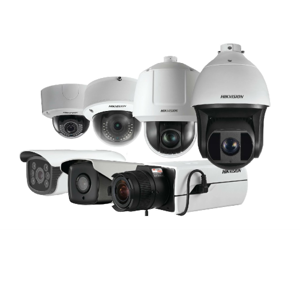
The suppliers below are primarily CCTV, surveillance and related security specialists rather than dedicated access control providers. They're listed separately since access control projects are frequently integrated with their services, but their own service descriptions are focused on surveillance, alarm or dash cam systems rather than door access control itself.
Access control consultants and service providers in Saudi Arabia support projects well beyond the installation itself. Typical consulting services include a full site and security assessment, access-point planning across every door and gate, system selection based on the required security level, defining door and access requirements, integration planning with CCTV or intercom systems, and ongoing maintenance and support once the system is live.
Engaging an access control consultant early is especially valuable for larger sites - offices, compounds, and industrial facilities - where the number of access points and how they need to integrate with existing security infrastructure should be mapped out before any hardware is ordered. Not every access control system service provider in KSA offers formal consulting as a separate service, so it's worth confirming this scope directly with a provider such as Core Link, Advanced Technology (Ajax), or Goodness Arrived For Security Est. - all of which combine access control installation with tailored, needs-based system design - before engaging them for planning work.
An access control system service in KSA covers the supply, installation, configuration, integration and maintenance of electronic systems - such as card readers, biometric scanners, keypads and electronic locks - used to control who can enter or exit a building, room or restricted area.
An access control system for a door consists of a reader, controller, electronic lock and management software that determines who can open a specific door, using credentials such as an RFID card, PIN, fingerprint or facial scan.
Access control systems in Saudi Arabia include biometric access control (fingerprint and facial recognition), RFID and card-based systems, keypad and PIN entry, and smart door systems that support mobile and remote access.
Yes. Biometric access control systems are widely used by businesses in Saudi Arabia because they remove the risk of lost, shared or duplicated credentials and provide a clear, individual record of who accessed a given door and when.
Yes. Most access control system providers in KSA offer integration with CCTV and video intercom systems, allowing a single access event to trigger a camera recording or a live intercom call for added verification.
Cost depends on the number of doors, the type of reader (card, PIN or biometric), and whether integration with CCTV or intercom systems is included. A single-door installation is far less expensive than a multi-door, building-wide system, so most access control system service providers in KSA will only give an accurate quote after a site assessment.
In many cases, yes. If the door hardware (lock, controller, cabling) is in good condition, a provider can often upgrade just the reader - for example, moving from card-only to card-plus-biometric - rather than replacing the entire access control system for that door.
Most professionally installed access control systems include fail-safe or fail-secure lock settings and local credential storage, so doors continue to function correctly during a power or network outage. This is a key point to confirm with your access control system service provider before installation, since the right setting depends on the door's fire-safety requirements.
A single-door access control system can typically be installed and commissioned within a day. A full-building or multi-site rollout takes longer and is usually planned in phases, with each door or zone tested and signed off before moving to the next.
It isn't mandatory, but most access control system service providers in KSA recommend one. A maintenance contract catches worn hardware, failing readers or configuration issues during routine visits - before they turn into a door failure or a security gap.

 0
0