
A jockey pump is a small, motor-driven pump used alongside a main fire pump to compensate for minor leaks in the fire protection system and automatically maintain stand-by pressure, reducing unnecessary wear on the main pump and its controller. Jockey pumps suppliers in ksa stock everything from small pressure-maintenance units to full multistage centrifugal jockey pump ranges rated up to 11 kW, sold alongside fire pumps suppliers in ksa offering complete fire pump sets for warehouses, plant rooms, residential towers and industrial sites. Buyers across Riyadh and Jeddah can source jockey and fire pump ranges built to recognized standards, with model, power, speed and protection rating varying significantly between products, so matching the right pump to a specific fire protection system matters as much as the price.
A LIFECO Jockey Pump is one of the recognized fire-protection pump brands referenced across the Gulf market, and Fire Pumps In Saudi Arabia are generally expected to meet NFPA (National Fire Protection Association) design standards alongside SASO (Saudi Standards, Metrology and Quality Organization) compliance before being accepted on a fire protection project. When a fire pump set is described as NFPA & SASO Approved, it means the pump curve, driver sizing and controller logic have been checked against both the international fire-protection engineering standard and the local regulatory requirement, which matters most at project handover and civil defense inspection stage.
Jockey pumps are built on a handful of core pump technologies, and the right one for a project depends on available space, pipe layout, and whether the pump needs to be mounted vertically or horizontally in the pump room.
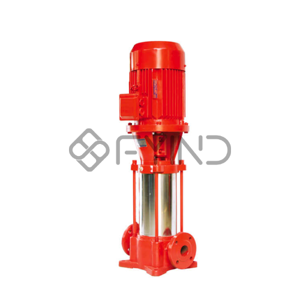
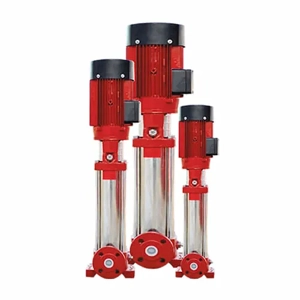
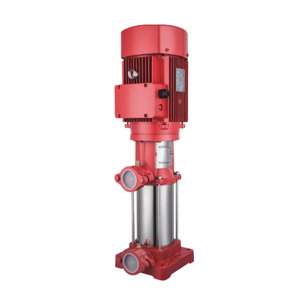
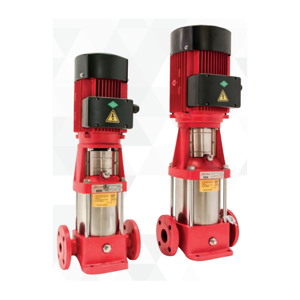
Vertical multistage jockey pumps stack several impeller stages in a compact vertical footprint, making them the most common choice for pump rooms with limited floor space. This is the design behind ranges such as the PV Vertical Multistage Centrifugal Jockey Pump, which builds pressure across multiple stages to hit the required stand-by setpoint even at a relatively low flow rate.
Horizontal multistage jockey pumps use the same staged-impeller principle but lay the shaft horizontally, which suits pump rooms with more floor area but tighter ceiling height, and can make routine bearing and seal maintenance easier to access than a vertical unit.
End-suction jockey pumps use a single-stage impeller with the suction inlet at the end of the casing, offering a simple, low-maintenance design for smaller fire protection systems that don't need the higher pressure output of a multistage unit.
Vertical turbine jockey pumps are used where the water source sits below the pump - such as a fire water storage tank or underground reservoir - drawing water up through a column rather than relying on positive suction pressure at the pump inlet.
Almost all jockey pumps are electric motor-driven rather than diesel, since their job is simply to top up stand-by pressure rather than deliver full fire-flow, so an electric motor with across-the-line starting is normally sufficient - this is the configuration used across the featured products below.
| Specification | Detail |
| Model | PV |
| Power | 1.1-11 kW |
| Voltage | 220/380/400/440 V |
| Nominal Diameter | 25-65 mm |
| Rotational Speed | 3500 rpm |
| Protection Rating | IP 55 |
| Specification | Detail |
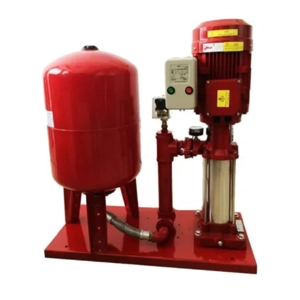
| Model | PD 188A |
| Power | 7.2 kW |
| Speed | 3600 rpm |
| Bore Stroke | 88 mm |
| Displacement | 0.456 l |
Supplied by Ajzal United Safety Company.
| Specification | Detail |
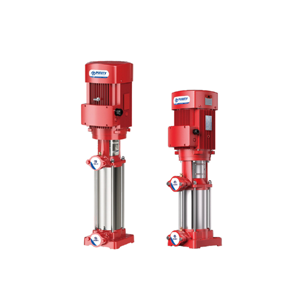
| Series | Excel |
| Material | Stainless Steel |
| IP Rating | IP55 |
| Specification | Detail |
| Brand | OLBIN |
| Model | J12V |
| Speed | 3500 rpm |
| Flow Rate | 50 GPM |
| Rated Power | 3 hp |
| Rated Voltage | 220/380 V |
| Rated Frequency | 60 Hz |
For Saudi fire-protection projects, UL Listing/FM Approval and NFPA 20 compliance are particularly important considerations when selecting fire-pump equipment, and Saudi suppliers currently market jockey-pump/fire-pump packages around these requirements. A Saudi project/vendor list specifically identifies Aurora, Armstrong, Bell & Gossett, Peerless, SPP, AC Fire Pumps/Xylem, NAFFCO, Patterson and Wilo for jockey fire pumps, alongside other internationally recognized brands active in the wider Gulf market.
Grundfos is a globally recognized pump manufacturer whose vertical multistage ranges are commonly specified for jockey and pressure-maintenance duty on commercial and industrial fire protection systems.
Armstrong is named on Saudi fire-protection vendor lists for jockey fire pumps, with a product range built around reliable pressure-maintenance duty for NFPA 20-compliant fire pump sets.
Aurora is another brand specifically identified on Saudi project/vendor lists for jockey fire pumps, typically supplied as part of a packaged fire pump set alongside a matching main pump and controller.
AC Fire Pumps (part of Xylem) is referenced on Saudi vendor lists as AC Fire Pumps/Xylem, offering jockey pump ranges designed to pair with UL-listed and FM-approved main fire pumps for larger commercial and industrial projects.
EBARA is an established international pump manufacturer whose multistage centrifugal ranges are used for jockey and general pressure-boosting duty across the wider Gulf market.
Peerless is named on Saudi fire-protection vendor lists for jockey fire pumps, with a fire pump product line that includes both split-case main pumps and matching jockey pump units.
Patterson is identified on Saudi project/vendor lists for jockey fire pumps, offering fire pump packages engineered to NFPA 20 and typically supplied with UL Listing or FM Approval documentation.
Wilo is named on Saudi vendor lists for jockey fire pumps, with a compact multistage range that suits both fire protection stand-by duty and general HVAC pressure-boosting applications.
SPP is specifically identified on Saudi project/vendor lists for jockey fire pumps, typically supplied as part of a complete fire pump set for commercial and industrial fire protection systems.
NAFFCO is a Gulf-region fire protection manufacturer named on Saudi vendor lists for jockey fire pumps, offering complete fire pump packages - main pump, jockey pump and controller - engineered to NFPA 20 for the regional market.
Fire pumps in ksa are almost never installed as a single unit - a complete fire pump set typically pairs a large main pump (electric or diesel driven) with a much smaller jockey pump that keeps the system pressurized between fire events. Without a jockey pump, even a minor pressure drop from a small leak or valve seepage would repeatedly trigger the main fire pump to start, causing unnecessary wear; the jockey pump absorbs these small pressure fluctuations so the main pump only runs when there's a genuine fire-flow demand.
While jockey pumps are most commonly associated with fire protection standby pressure, jockey Pumps for Chilled Water systems perform a similar pressure-maintenance role in closed-loop HVAC circuits, topping up minor losses so the main chilled water circulation pump isn't cycled unnecessarily. Buyers sourcing pumps for Fire Protection & HVAC projects together should confirm whether the same jockey pump range is rated for both duties, since fire protection standby pressure and chilled water make-up duty can have different flow and cycling requirements even though the pump hardware looks similar.
Alongside jockey pumps, a LIFECO Split Case Fire Pump is a common choice for the main pump in larger fire protection systems, where a horizontal split-case design allows easier maintenance access without disturbing the suction and discharge piping. Buyers should confirm which main pump brand a jockey pump is being paired with, since controller compatibility and pressure switch settings need to be matched between the two.
Jockey pumps show up wherever a facility relies on a pressurized fire protection loop that needs to stay ready between actual fire events. The scenarios below reflect how the pump is actually used on site, rather than a generic feature list.
A commercial building's automatic sprinkler network loses small amounts of pressure through weep holes, gaskets and valve packing over time. The jockey pump senses this drop and cuts in for a few seconds to restore setpoint pressure, so the much larger main sprinkler pump only starts when a sprinkler head actually opens during a real fire.
On a high-rise or industrial site, standpipe risers slowly lose pressure through valve packing between routine tests. The jockey pump keeps the standpipe pressurized so firefighters get immediate flow at any hose valve on any floor, without waiting for the main pump to spin up first.
Tall towers have a much larger volume of fire main piping spread across many floors, with more joints and valves where minor seepage can occur. The jockey pump compensates for this larger leak surface so the main pump isn't triggered every time a small drop occurs somewhere in the riser.
A processing or petrochemical plant with an extensive underground fire main network sees more seepage simply because there's more pipe in the ground. The jockey pump handles this continuously so the plant's diesel or electric main fire pump stays in standby unless there's a genuine large-scale demand.
A large distribution warehouse with sprinkler coverage over extensive racking often sits unattended overnight, when small pressure drops would otherwise go unnoticed. The jockey pump keeps the wide-area piping network pressurized without needing staff on site to catch a slow leak.
A mixed-use tower or residential compound typically runs its fire protection loop separately from the domestic water booster system. The jockey pump keeps the dedicated fire line pressurized on its own circuit, so day-to-day resident water use has no effect on fire system readiness.
Hospitals in particular need their fire protection system continuously ready given round-the-clock occupancy, which is why jockey pump maintenance schedules on these facilities tend to be stricter than on a standard commercial building - any gap in standby pressure carries a higher life-safety consequence.
Grouped by area rather than listing every individual use case, jockey pump applications generally fall into five categories:
| Area | Typical Applications |
| Commercial | Offices, malls, hotels, business centers |
| Residential | Apartment towers, residential complexes, compounds |
| Industrial | Factories, processing plants, petrochemical facilities |
| Warehousing & Logistics | Warehouses, distribution centers, storage facilities |
| Institutional & Infrastructure | Hospitals, schools, government buildings, large facilities |
The strongest use cases are facilities with dedicated fire sprinkler, hydrant or standpipe systems where maintaining system pressure is necessary between fire events, rather than sites without a pressurized fire main to begin with.
| Pump Type | Power / Size | Price Range (per unit) |
| Vertical Multistage Centrifugal Jockey Pump | 1.1-11 kW | SAR 1,200-6,500 |
| Multi Stage Jockey Pump (PD Series) | 7.2 kW | SAR 2,500-7,500 |
| Stainless Steel Vertical Multistage Pump | IP55 | SAR 2,000-8,500 |
| Small Jockey Pump (Olbin-type) | 3 hp, 50 GPM | SAR 1,800-4,500 |
| Complete Fire Pump Set (main + jockey) | Project sized | SAR 25,000-150,000+ |
Fire pumps or jockey fire pump price in ksa depends heavily on power rating, certification (UL Listing/FM Approval, NFPA 20 compliance) and whether the pump is bought standalone or as part of a complete fire pump set - bulk and project quantities are typically priced well below these per-unit figures, so always request a project quote for a full fire pump room rather than relying on catalogue unit pricing.
A jockey pump is a small, motor-driven pump that runs alongside the main fire pump to compensate for minor leaks and automatically maintain stand-by pressure in the fire protection system, preventing the much larger main pump from starting unnecessarily.
Suppliers such as New Future Time For Safety Devices Establishment, Ajzal United Safety Company, International Factory For Industry, Azeidk Group and Safety Hand Tools And Industrial Equipments list direct phone and mobile numbers in the directory above for Riyadh and Jeddah.
Jockey pump and fire pump suppliers are active across Saudi Arabia's major industrial hubs, including the Eastern Province around Khobar and Dammam, though the specific suppliers profiled in this directory are currently listed in Riyadh and Jeddah - always confirm delivery coverage to your city when ordering.
A jockey fire pump is a small pressure-maintenance pump that keeps the system pressurized between fire events, while a diesel fire pump is typically the main fire pump itself, sized to deliver the full design flow and pressure during an actual fire, and is chosen where a reliable power source independent of the electrical grid is required.
A complete fire pump Set typically includes the main fire pump (electric or diesel driven), a jockey pump for stand-by pressure, a controller for each pump, and the associated valves, gauges and piping needed to connect the set into the building's fire protection system.
Fire fighting pumps in saudi arabia are generally expected to meet NFPA 20 design and installation guidance alongside SASO compliance for the local market, and civil defense inspection will typically ask for documentation confirming both before final sign-off.
Both NAFFCO and LIFECO are established fire pump brands referenced across Gulf fire protection projects, and either can generally be specified depending on project preference, provided the selected model and its jockey pump pairing meet the same NFPA and SASO requirements as any other approved fire pump set.

 0
0