
Compare verified induction motor suppliers in Saudi Arabia by brand, motor type, power range, efficiency class and price. This page is built for procurement teams, EPC contractors, plant engineers and maintenance managers who need to shortlist the right electric motor supplier in KSA quickly, whether the requirement is a single-phase induction motor for a small pump or a high-voltage three-phase induction motor for a compressor station.
Taj Al Tadhamon Establishment supplies low, medium and high voltage electrical motors to industrial buyers across Riyadh and the wider Central Region. The company is a practical choice for procurement teams sourcing standard duty three-phase induction motors as well as higher voltage units for heavier plant loads.
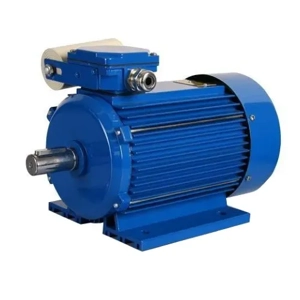
A general-duty squirrel cage induction motor built for continuous industrial service on low and medium voltage networks. Suited to pumps, fans and conveyor drives where buyers need a dependable motor with straightforward local servicing rather than an imported specialty unit.
Park United Park Company focuses on ATEX-rated motors for hazardous area applications in Saudi Arabia, making it a relevant shortlist name for buyers in oil & gas, petrochemical and gas processing facilities that need flameproof or explosion-proof induction motors rather than standard duty units.
A certified explosion-proof squirrel cage motor for Zone 1 and Zone 2 hazardous areas. Built with a flameproof enclosure to contain internal arcing, this motor is specified for pumps, compressors and blowers operating in gas plants, refineries and chemical processing units where standard TEFC motors are not permitted.
Middle East Electrical Motors Factory manufactures and supplies three-phase electric motors from a Dammam base, giving Eastern Province buyers a local source for standard duty and heavy-duty induction motors without importing lead times.
A locally manufactured three-phase induction motor built to IEC frame sizes for conveyor, fan and pump duty. Local production shortens delivery time on common frame sizes, which matters for maintenance teams replacing a failed motor on a running line.
Riyadh Al Etqan Co operates from Jeddah and supplies industrial electric motors to manufacturing and utility buyers across the Western Region, making it a relevant option for teams that need multi-brand sourcing and IE2/IE3 stock in one place.
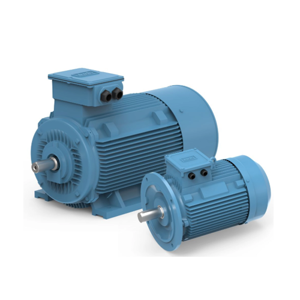
A stocked industrial motor range covering IE2 standard and IE3 premium efficiency classes. Positioned for buyers replacing motors on production lines who need to match an existing efficiency class without a long lead time from Jeddah port-side stock.
Arabia Company L.L.C. runs an induction and electric motor shop on the Dhahran-Jubail Express Road, serving the dense industrial corridor between Dammam, Jubail and Al Khobar with retail and bulk motor supply.
A retail-and-bulk induction motor stock covering common frame sizes for pumps, fans, mixers and workshop machinery. Useful for maintenance teams needing same-day or next-day replacement stock rather than a made-to-order motor.
| Brand | Motor Type | Power Range | Efficiency Class | Available From |
|---|---|---|---|---|
| ABB | Three Phase / Foot Mounted | 0.25 kW – 355 kW | IE2 / IE3 / IE4 | Riyadh Al Etqan Co, Taj Al Tadhamon |
| Siemens | Three Phase / TEFC | 0.25 kW – 200 kW | IE2 / IE3 | Riyadh Al Etqan Co |
| WEG | Squirrel Cage, TEFC | 0.18 kW – 315 kW | IE2 / IE3 | Middle East Electrical Motors Factory |
| TECO | Three Phase Induction Motor | 0.37 kW – 132 kW | IE2 / IE3 | Arabia Company L.L.C. |
| Lubi Pumps | LMT Series, Cast Iron Three Phase | 0.5 hp – 475 hp | IE2 / IE3 | Riyadh Al Etqan Co, Middle East Electrical Motors Factory |
| VEMAT | Single Phase VMB / VMC Series | 0.04 kW – 4 kW | Standard Efficiency | Arabia Company L.L.C., Taj Al Tadhamon |
| Brook Crompton / Baldor / Nidec / Leroy Somer | Three Phase / Flameproof (project basis) | 0.55 kW – 250 kW | IE2 / IE3 | Park United Park Company, Riyadh Al Etqan Co |
Squirrel Cage Induction Motor – the standard choice for most industrial buyers in KSA, available from Middle East Electrical Motors Factory and Riyadh Al Etqan Co from SR 1,200 for smaller frames.
Slip Ring Induction Motor – specified for crushers and mills needing controlled starting torque, sourced on a project basis through Riyadh Al Etqan Co, typically priced from SR 15,000 depending on rating.
Single Phase Induction Motor – VEMAT VMB/VMC series available from Arabia Company L.L.C. and Taj Al Tadhamon, priced from SR 650 for 0.04–4 kW units, suited to workshop tools and small pumps.
Flameproof / Explosion Proof Induction Motor – ATEX certified units from Park United Park Company for hazardous-area duty, priced from SR 4,500 upward depending on zone rating and frame.
Flameproof / Explosion Proof Induction Motor – ATEX certified units from Park United Park Company for hazardous-area duty, priced from SR 4,500 upward depending on zone rating and frame.
Servo MotorsServo motors are designed for precise position, speed and torque control in robotics, CNC machines, packaging equipment and automated production lines. They are available in power ratings from 100W to 15 kW, operating voltages of 48V–480V, speeds up to 6,000 RPM, and support position, speed and torque feedback for high-precision applications.
DC Electric Motors DC electric motors provide excellent speed control and high starting torque for conveyors, elevators, packaging machines and automated equipment. They are commonly available in 12V to 220V DC, power ratings from 50W to 100 kW, speeds of 1,000–3,000 RPM, and can be supplied with brushed or brushless designs.
AC Electric Motors AC electric motors are widely used for pumps, compressors, fans, conveyors and industrial machinery, offering reliable and energy-efficient performance. They are available in single-phase and three-phase configurations with power ratings from 0.18 kW to 500 kW, operating voltages of 230V, 400V and 415V, speeds of 750–3,000 RPM, and IP55/IP66 protection.
| Factor | Three Phase | Single Phase |
|---|---|---|
| Typical Power Range | 0.37 kW – 500 kW+ | 0.04 kW – 4 kW |
| Starting Torque | High, self-starting | Lower, needs capacitor start |
| Best Fit | Pumps, compressors, conveyors, industrial machinery | Small workshop tools, light-duty fans, domestic pumps |
| Buyer Takeaway | Default choice for continuous industrial loads in KSA plants | Only where three-phase power is unavailable or load is under 4 kW |
| Factor | Squirrel Cage | Slip Ring |
|---|---|---|
| Starting Torque | Moderate | High, adjustable via rotor resistance |
| Maintenance | Low, no brushes | Higher, brush and slip ring wear |
| Cost | Lower | Higher |
| Buyer Takeaway | Best for most pumps, fans and conveyors | Choose for crushers and mills with heavy starting loads |
| Factor | TEFC | ODP |
|---|---|---|
| Enclosure | Totally enclosed, fan cooled | Open, ventilated |
| Dust / Moisture Protection | IP55 typical, good protection | IP23 typical, limited protection |
| Best Fit | Outdoor plants, dusty and humid coastal sites | Clean, indoor, well-ventilated environments |
| Buyer Takeaway | Recommended default for most KSA industrial sites | Only for controlled indoor environments |
| Class | Efficiency Level | Price Premium | Best Fit |
|---|---|---|---|
| IE2 | Standard efficiency | Base price | Short run-hour, low-cost replacement jobs |
| IE3 | Premium efficiency | 10–20% above IE2 | Continuous-duty industrial motors, most new installations |
| IE4 | Super premium efficiency | 25–40% above IE2 | High run-hour operations with strict energy targets |
Before selecting an induction motor, buyers should check the following specifications:
Matching these specifications against the driven equipment's nameplate before contacting a supplier reduces the risk of ordering an incompatible motor, particularly for frame size and mounting type where a mismatch means the motor will not physically fit.
| Application | Recommended Motor |
|---|---|
| Water Pumps | IE3 three-phase squirrel cage, B5 flange mounted, IP55 |
| Air Compressors | IE3 TEFC motor, high starting torque, VFD compatible |
| Conveyor Systems | Foot mounted squirrel cage motor, 4 or 6 pole |
| HVAC Equipment | IE3 fan and blower duty motor, VFD compatible for variable airflow |
| Crushers | Slip ring induction motor for controlled high starting torque |
| Cooling Towers | TEFC motor rated for outdoor humidity, IP55 minimum |
| Blowers & Fans | 2 or 4 pole squirrel cage motor, IE3 for continuous run hours |
| Industrial Mixers | High starting torque motor, foot mounted, gearbox compatible |
| Machine Tools | Precision-balanced motor with low vibration, IE3 preferred |
| Generators | High voltage synchronous or induction motor sized to prime mover load |
| Power Range | Typical Use | Estimated Price (SR) |
|---|---|---|
| 0.18 – 3 kW | Small pumps, fans, workshop tools | SR 650 – SR 3,500 |
| 4 – 37 kW | Conveyors, medium pumps, compressors | SR 4,000 – SR 25,000 |
| 45 – 200 kW | Large pumps, cooling towers, mixers | SR 30,000 – SR 150,000 |
| 250 kW+ | Heavy plant, crushers, high voltage drives | Project quote on request |
Prices are indicative and vary by brand, efficiency class, mounting type and current market conditions. Request a formal quotation from the supplier for order-ready pricing.
A three-phase IE3 squirrel cage motor with IP55 protection, foot or flange mounted to match the pump coupling, is the standard choice for most pumping applications in Saudi Arabia.
IE3 TEFC three-phase motors with high starting torque handle compressor loads well, and VFD-compatible units are recommended where the compressor runs on variable load.
Match the motor kW rating to the driven equipment's load requirement plus a safety margin, and confirm the existing nameplate rating when replacing a motor to avoid under or oversizing.
IE2 is standard efficiency, IE3 is premium efficiency with 10 to 20 percent lower losses, and IE4 is super premium efficiency for the highest energy savings on high run-hour equipment.
IE3 inverter-duty rated squirrel cage motors with reinforced insulation are suitable for VFD operation and are commonly stocked by ABB and Siemens motor suppliers in KSA.
IP55 covers most industrial installations, IP56 suits wash-down areas, and IP65 is recommended for heavy dust or high-pressure cleaning environments such as cement plants.
Motors rated for +50°C ambient with Class F insulation and Class B temperature rise are recommended for Saudi Arabia's high ambient conditions.
Choose three-phase motors for industrial applications and continuous-duty equipment. Single-phase motors are better suited for small tools and light-duty machinery.
ATEX or IECEx certified flameproof (Ex d) induction motors are recommended for Zone 1 and Zone 2 hazardous locations in industrial facilities.
ABB, Siemens, WEG, TECO, Brook Crompton, Baldor, Nidec and Leroy Somer are among the most commonly used induction motor brands for industrial applications across Saudi Arabia.
Many induction motor suppliers in Saudi Arabia provide installation, commissioning, repair, preventive maintenance and after-sales support, helping businesses maintain reliable motor performance throughout the equipment lifecycle.